


In today's market environment, there's a notable disconnect between investor sentiment and actual market performance. The timeless wisdom of Warren Buffett to be "fearful when others are greedy and greedy when others are fearful" remains particularly relevant. Despite various economic and political uncertainties creating market volatility, historical evidence continues to support the benefits of maintaining long-term investment discipline.
The current landscape presents an interesting paradox: while investors express concerns about various factors including economic conditions, trade policies, and monetary policy, many fundamental market indicators remain robust. The key to successful investing during volatile periods isn't about reacting to every market movement, but rather maintaining a strategically diversified portfolio aligned with your investment timeframe and risk preferences. What insights can we gain from examining current market sentiment versus actual performance?
Market sentiment reaches pessimistic levels despite positive returns
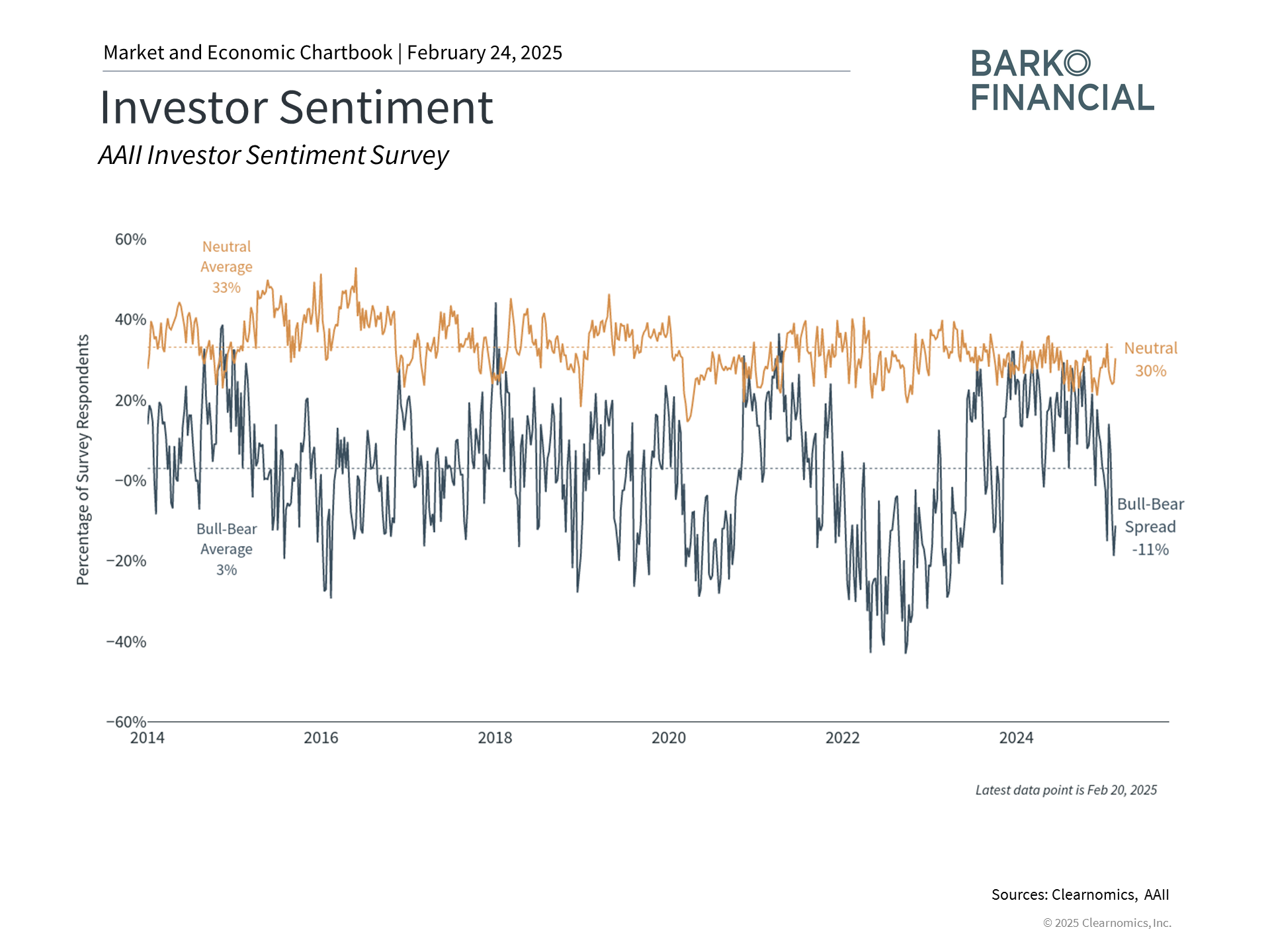 |
Recent data from the AAII Investor Sentiment Survey reveals a significant bearish tilt, with negative sentiment surpassing positive outlook by up to 19%. This represents the highest level of pessimism since the recession fears of late 2023. The data demonstrates how rapidly investor attitudes can shift.
A notable divergence exists between market perception and reality. While investor confidence has declined and daily market volatility persists, major market indices have delivered positive performance in recent months. This pattern reinforces the concept that sentiment often serves as a contrary indicator. As Buffett's insight suggests, the most promising investment opportunities frequently emerge when investor anxiety peaks.
This phenomenon occurs because emotional responses can shift rapidly and may not accurately reflect future market drivers. Markets have demonstrated numerous instances of advancing despite widespread pessimism - following the 2008 financial crisis, during 2017's trade tensions, throughout the 2020 pandemic recovery, after the 2022 market decline, and numerous other occasions. Conversely, periods of extreme optimism often warrant increased caution.
Risk and return management through strategic portfolio design
 |
Sentiment indicators should be viewed through a historical lens, much like our approach to portfolio management. Investment strategies should provide confidence through their design to withstand various market conditions while supporting long-term objectives, regardless of short-term market fluctuations.
Several key economic indicators remain positive: unemployment stands at historical lows, the manufacturing sector shows recovery signs since 2022, business leadership expresses confidence, and productivity metrics have improved year-over-year. However, stock valuations approaching historical highs suggest potential challenges for broad market returns going forward.
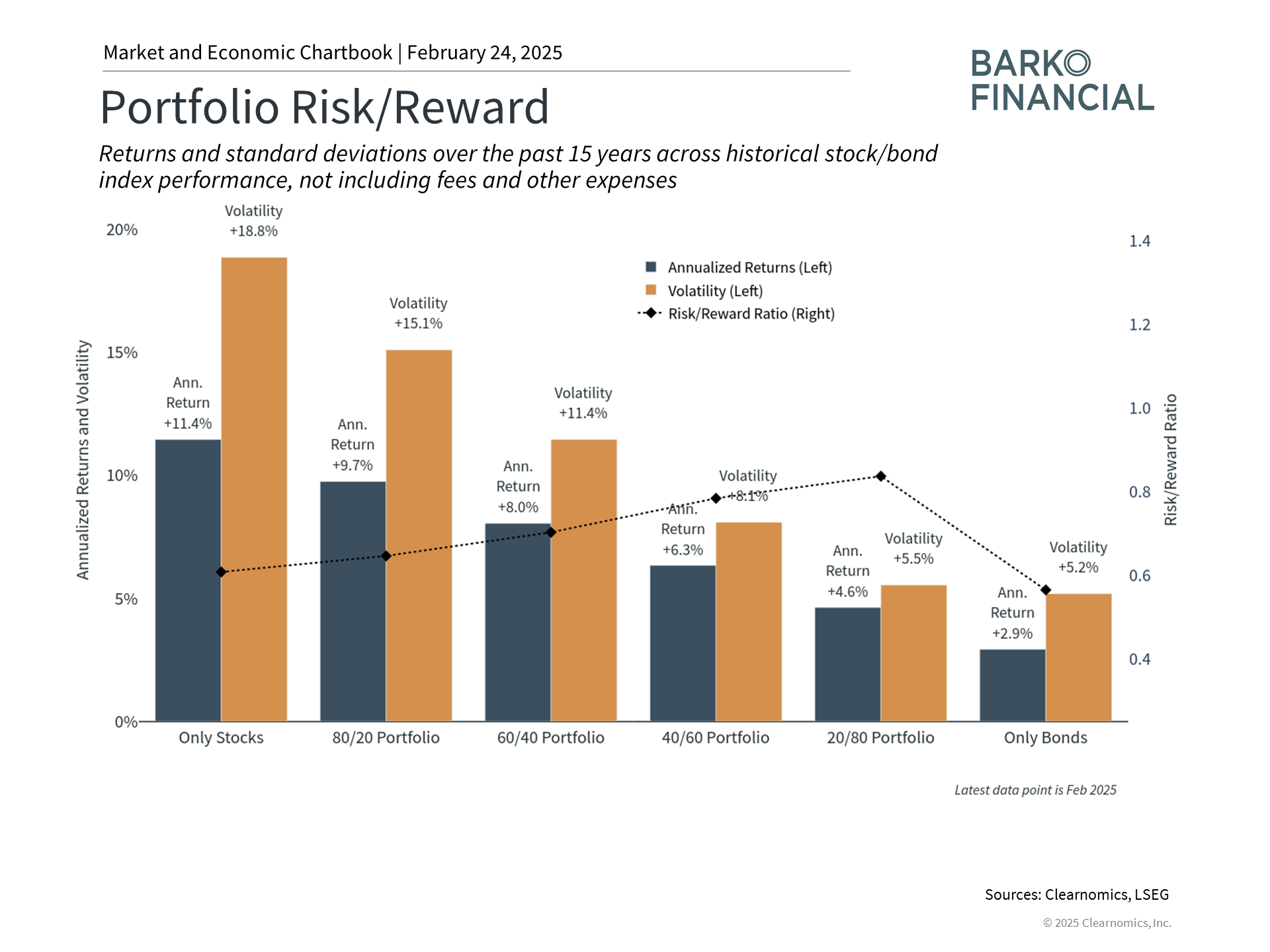
The solution to navigating mixed market signals and negative sentiment isn't market timing or complete withdrawal. Instead, these conditions emphasize the importance of strategic portfolio construction. The chart illustrates the fundamental relationship between risk and reward in investment decisions. When valuations suggest increased risk in certain market segments, it may be prudent to adjust allocations toward other opportunities.
Effective portfolio management involves balancing various asset classes to account for different market and economic scenarios, managing risk while pursuing returns aligned with your financial objectives. Market declines can create opportunities for rebalancing and acquiring quality investments at attractive valuations. This strategic approach highlights the value of working with professional advisors in developing investment strategies.
Long-term investment success through market cycles
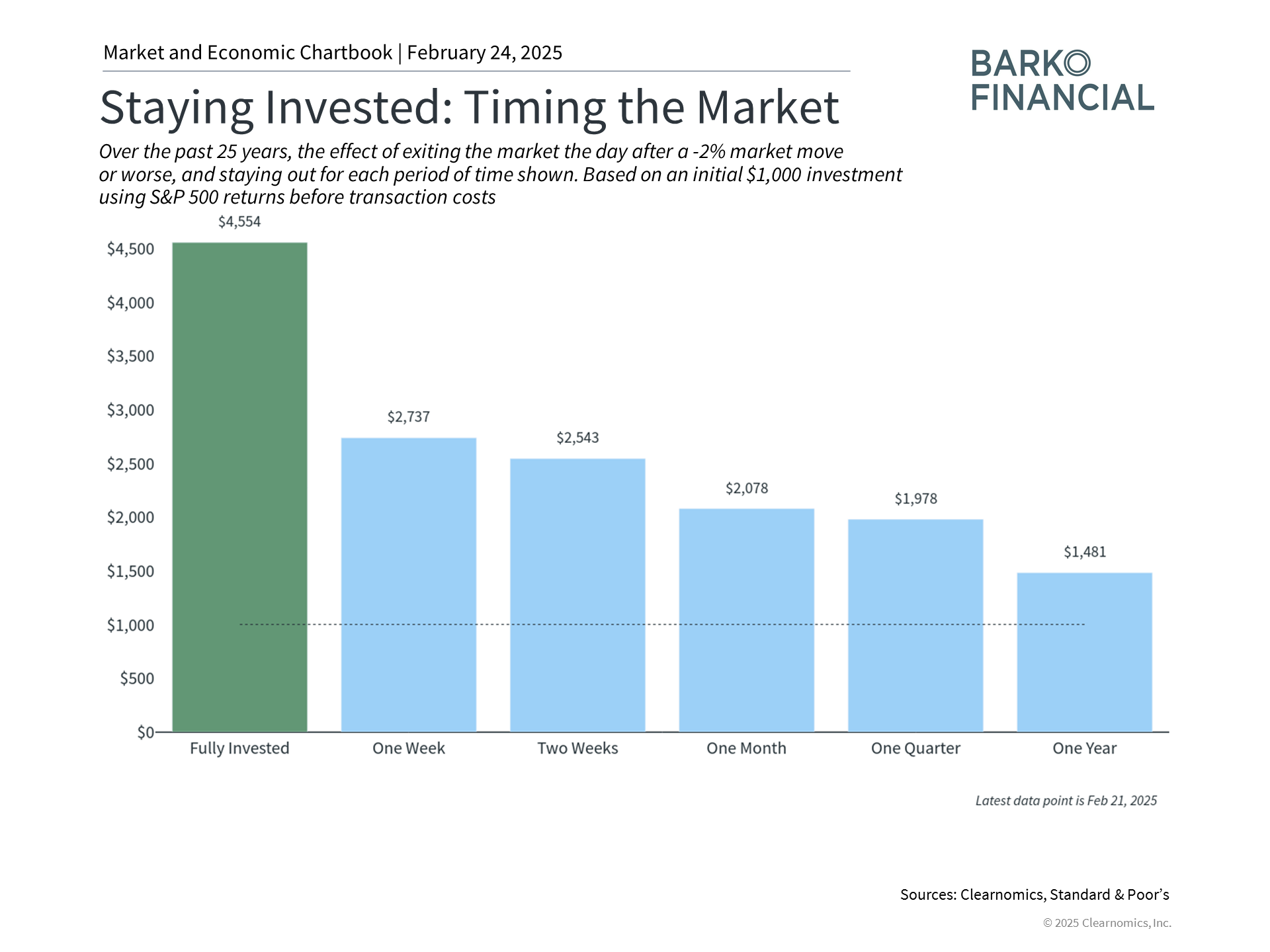 |
Maintaining market exposure over time remains crucial for long-term investors. Historical evidence consistently demonstrates that staying invested through market cycles is fundamental to building wealth over extended periods. While short-term market uncertainty may arise from various sources, attempting to time market moves often proves counterproductive.
The chart demonstrates that over the past 25 years, maintaining investments during market declines proved more effective than temporary market exits. Though past performance doesn't guarantee future results, the rapid nature of sentiment shifts reinforces why disciplined investors often achieve better outcomes.
The bottom line? While market volatility and negative headlines naturally create concern, historical evidence supports maintaining well-structured portfolios through market cycles. Disciplined investors who stay the course typically position themselves best for long-term success.