


With the Federal Reserve's monetary policy maintaining a steady course in 2025, investors are closely monitoring its implications. Following rate hikes in 2022 and cuts in 2024, the Fed has kept rates stable despite growing concerns about tariffs, consumer confidence, and economic growth. What does this policy stance mean and how should investors interpret it?
The Fed maintains its steady policy amid economic uncertainty
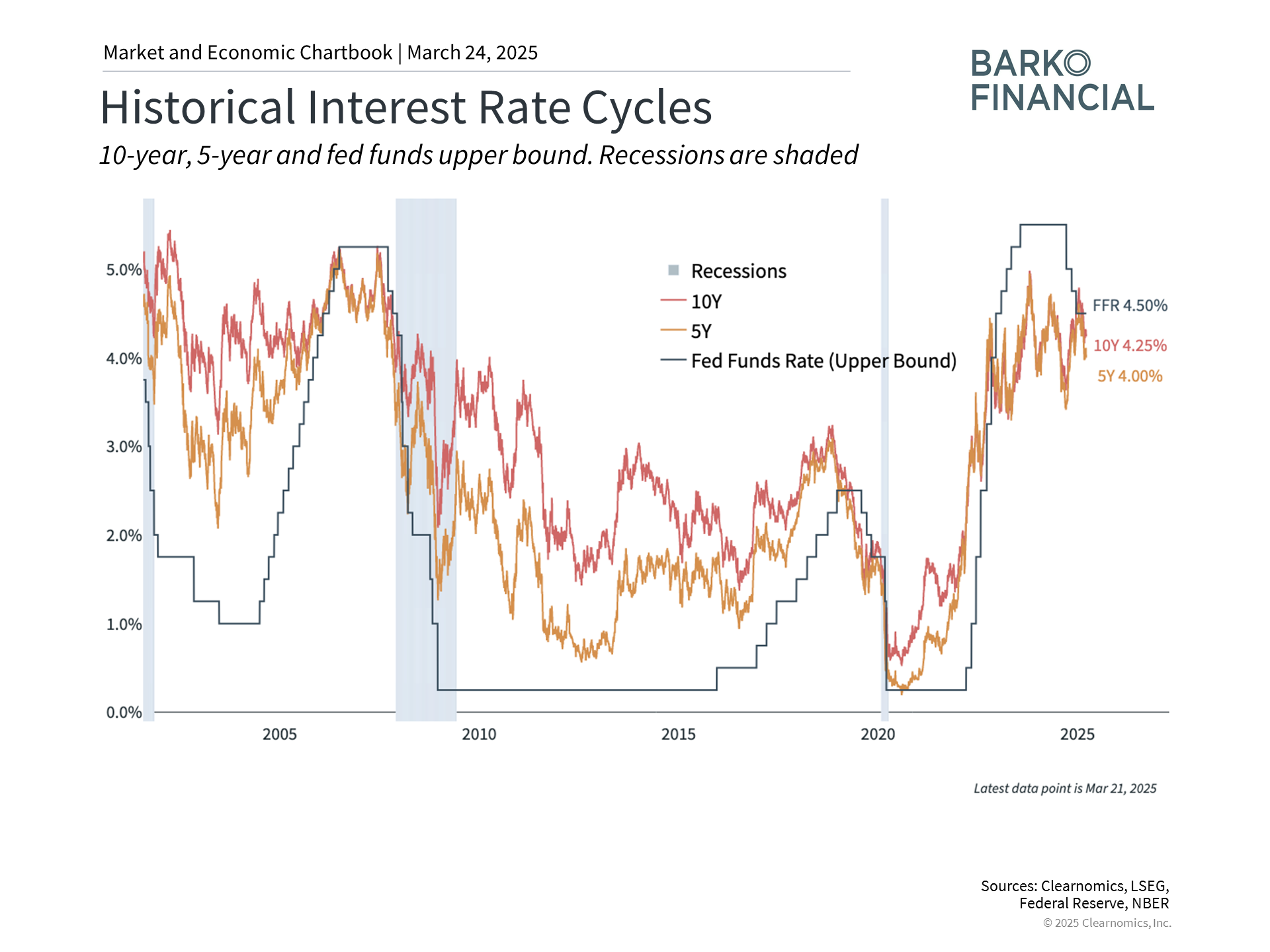 |
The Federal Reserve operates under a Congressional mandate to balance two key objectives: maximizing employment while maintaining price stability. This dual mandate guided the Fed's aggressive rate increases in 2022 to combat inflation, followed by rate reductions in 2024 as price pressures moderated. The feared economic slowdown that concerned investors at the start of 2024 did not materialize.
Recent economic projections from the Fed's March meeting indicate a potential slowdown, with 2025 GDP growth forecasted at 1.7%, down from 2.5% in 2024 as reported by the Bureau of Economic Analysis. This would mark the lowest growth rate since 2022's inflation-challenged environment.
The Fed's cautious approach reflects several key considerations. Regarding tariffs, they distinguish between temporary price increases on specific items versus broader inflationary pressures. This mirrors the 2018 experience with washing machine prices, which spiked temporarily but later stabilized. However, more extensive and prolonged tariffs could lead to broader price increases.
Currently, all three major inflation measures remain above the Fed's 2.0% target, contributing to recent market volatility. Yet the Fed sees underlying economic strength, with Chair Jerome Powell highlighting robust employment data, wage growth, and job availability. He also noted the disconnect between consumer sentiment and actual spending patterns.
The interpretation of economic data presents challenges. For instance, anticipation of tariffs might actually increase near-term consumer spending, contrary to expectations. Additionally, while higher food prices impact households significantly, they are considered lagging indicators of inflation.
Rate cuts still anticipated for 2025
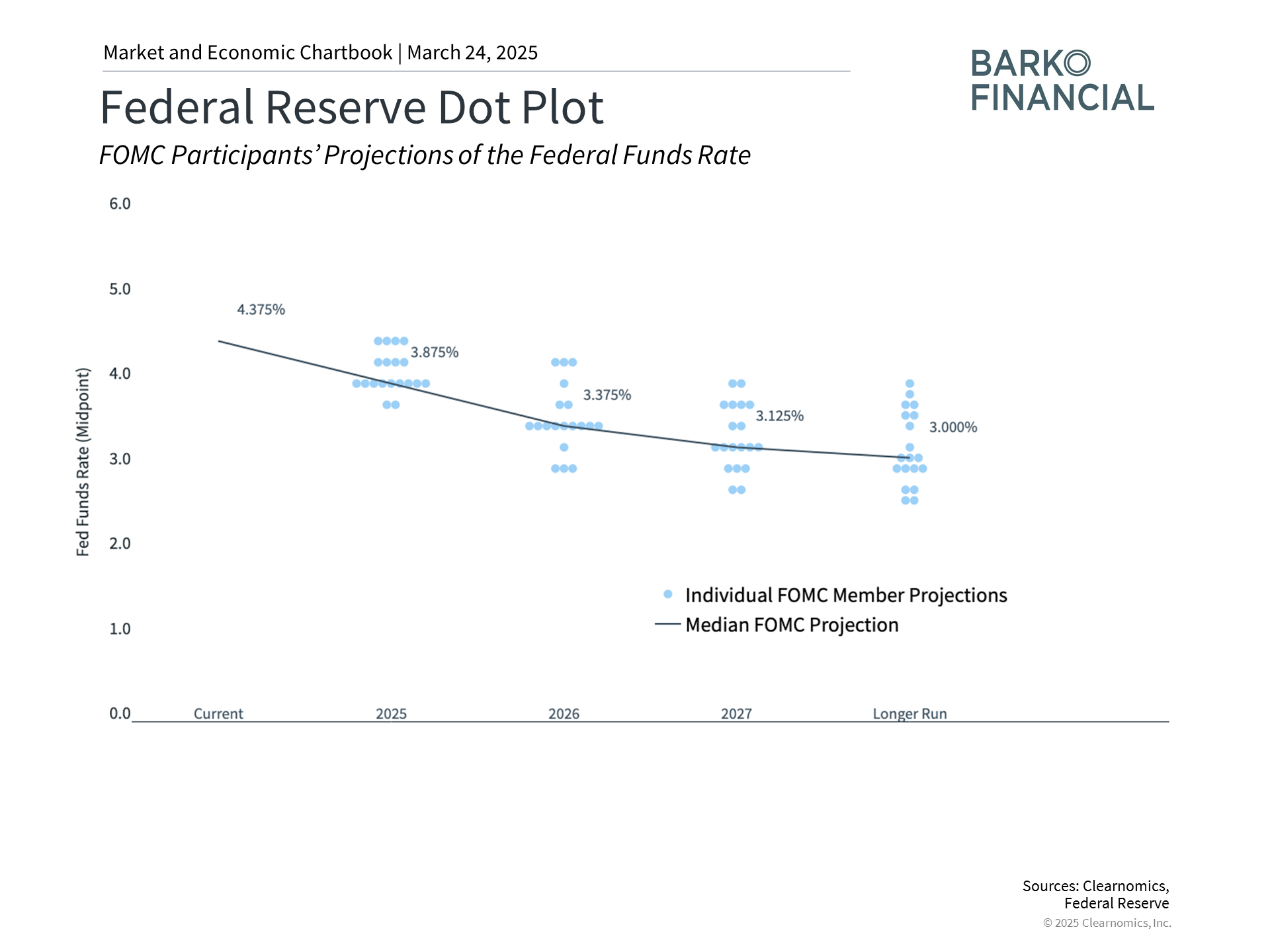 |
Despite maintaining rates at the March meeting, the Fed continues to project two rate cuts in 2025. Market expectations align with this view, suggesting two to three cuts this year as inflation potentially moderates despite tariff uncertainties.
These projections should be viewed with perspective. Consider how 2024 began with expectations of seven to eight cuts before settling at three actual reductions. Even the Fed's own quarterly projections undergo significant revisions.
The Fed's announcement to slow its balance sheet reduction provides additional economic support. This policy shift effectively helps lower interest rates through increased Treasury security purchases. This marks an important development in the Fed's "quantitative tightening" program.
For long-term investors, the broader trajectory of monetary policy matters more than individual rate decisions. Historically, declining rates have supported economic growth by reducing borrowing costs for businesses and consumers.
The hidden risks of holding excess cash
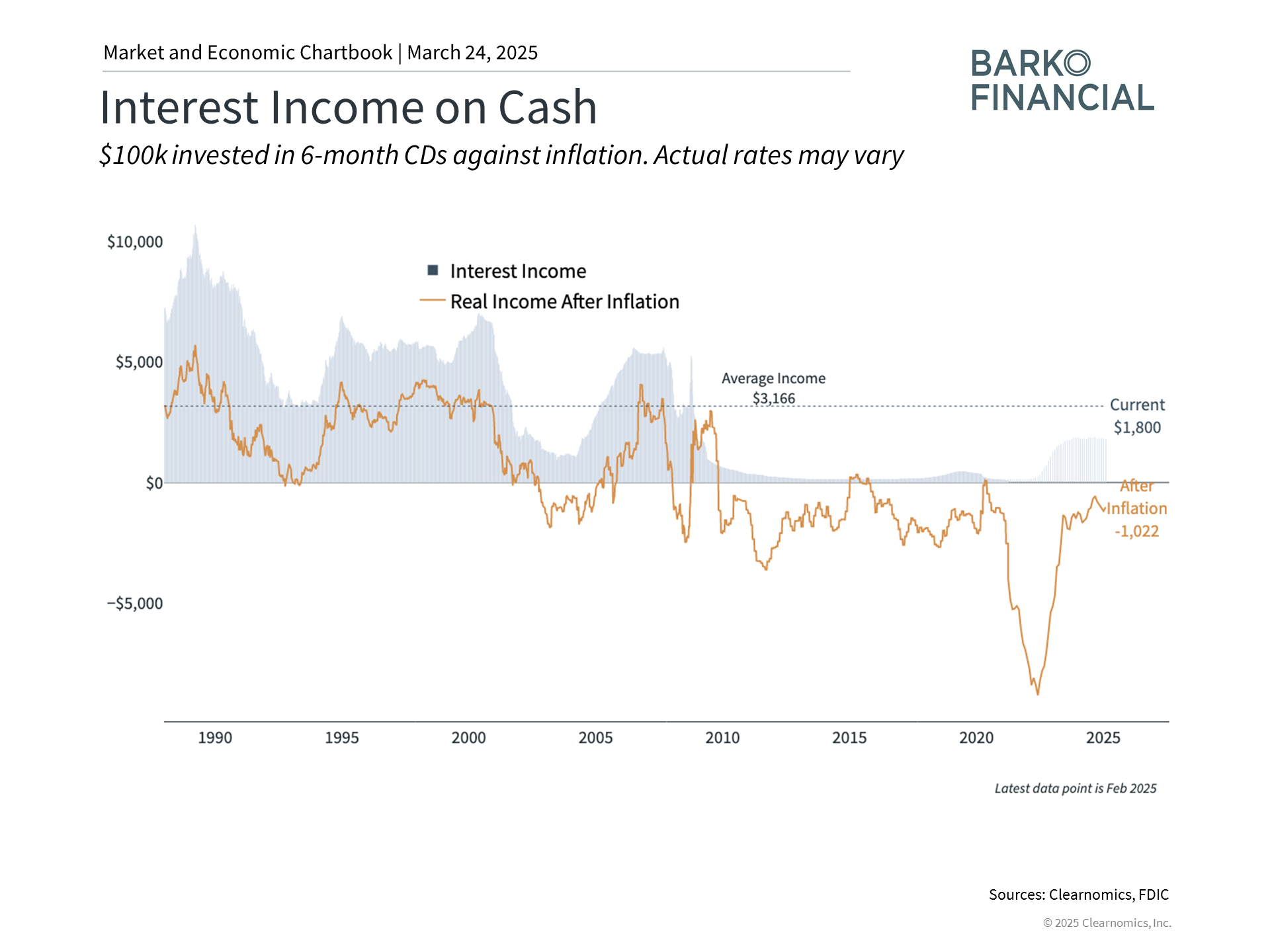 |
While elevated rates may make cash positions appealing, maintaining excessive cash can be detrimental to long-term financial goals. Markets often recover unexpectedly, and missing these rebounds can significantly impact portfolio growth.
Despite attractive nominal yields, many cash investments provide negative real returns after accounting for inflation. The purchasing power erosion might not be immediately apparent but can substantially impact long-term wealth preservation.
While cash serves important short-term needs, it's not an effective long-term strategy for generating income or growing wealth. Despite ongoing uncertainties around recession risks, tariffs, and Fed policy, maintaining a long-term perspective remains crucial.
The bottom line? The Fed's balanced approach amid economic uncertainties provides a model for investors. History suggests that maintaining a long-term focus, rather than reacting to short-term events, best serves investment objectives.