



Increased uncertainty in financial markets has triggered fluctuations in bonds similar to those seen in equities. These movements have been driven by tariff policies and tensions between the presidential administration and the Federal Reserve, resulting in elevated interest rates and bond yields. Although short-term volatility often produces unexpected outcomes, investors should recognize that such periods emerge regularly, even if each instance has unique causes. For those who depend on their bond portfolios for income generation, the current climate offers both risks and potential advantages for their financial strategies.
Bond markets have experienced significant swings
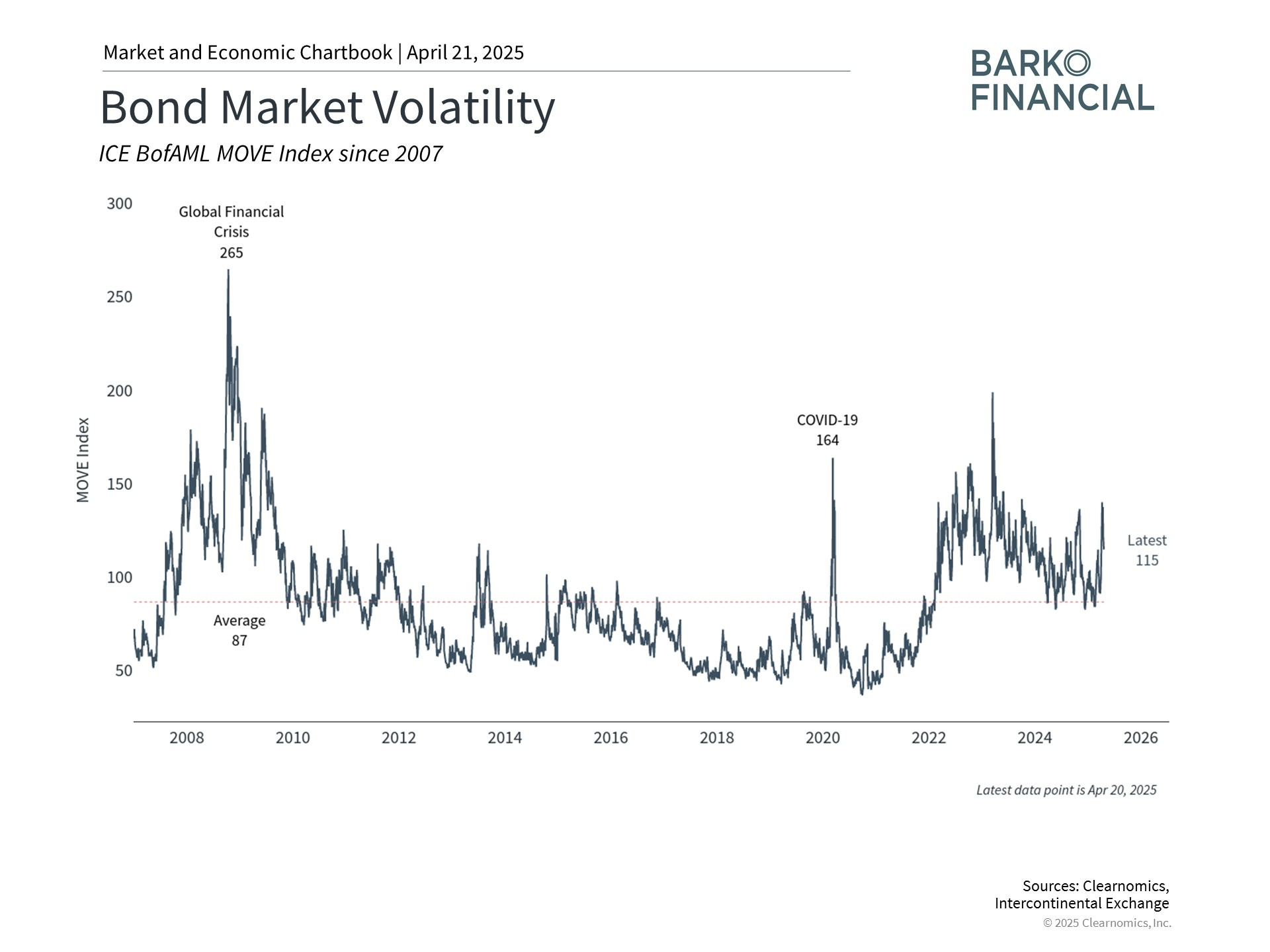
A fundamental concept in portfolio diversification relies on the typically inverse relationship between stocks and bonds. When one asset class moves in one direction, the other tends to move oppositely. This isn't coincidental – equities generally thrive during economic strength while bonds have traditionally performed well amid economic uncertainty. This relationship explains why combining various asset classes can create more stable portfolios than single-asset approaches, enhancing the probability of meeting financial objectives.
What's occurring in bond markets now and why should investors care? Occasionally, market volatility creates temporary exceptions to established patterns. Bond volatility specifically emerges when markets adapt to major economic or policy shifts, such as today's developments regarding tariffs and questions about Federal Reserve independence. Regarding tariffs, bond investors must balance two potentially conflicting outcomes: trade conflicts might increase inflation (typically negative for bonds) while potentially slowing economic expansion (usually positive for bonds).
Furthermore, concerns about market liquidity, potential movement away from U.S. assets, and technical market factors have influenced recent developments. The dollar has declined alongside bonds – an unusual pattern since higher bond yields typically attract international investment. The chart illustrates how bond market volatility has intensified not just in recent weeks but throughout the past three years.
While various events contribute to bond market movements, they fundamentally reflect heightened policy uncertainty. Bond pricing depends heavily on interest rate trajectories and economic outlooks, as well as the clarity of these pathways. Just as recent trade policy shifts have complicated planning for households and businesses, forecasting economic variables has become more challenging, whether for the coming months or year ahead. This includes Federal Reserve policy direction, further complicated by headlines about President Trump and Chair Powell's relationship. Consequently, bond price fluctuations alongside stocks are unsurprising.
Bonds continue to provide portfolio stability despite volatility
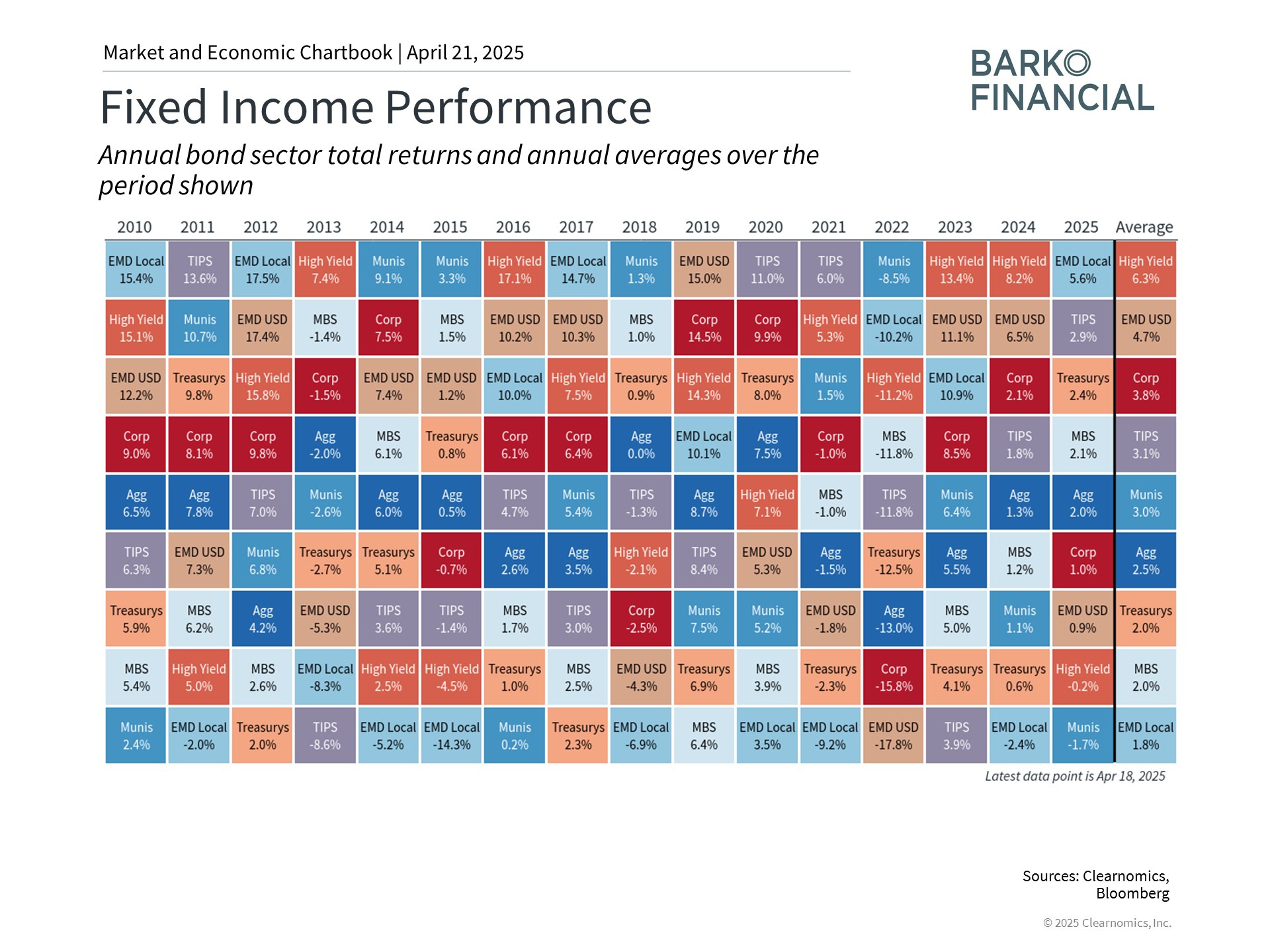
Context remains important when analyzing these developments. The 10-year Treasury yield currently hovers around 4.3%, remaining within its two-year range. Generally, interest rates are higher than many analysts anticipated at the beginning of the year.1
Nevertheless, most bond sectors maintain positive year-to-date returns, including the U.S. Aggregate Bond Index, Treasurys, and investment grade corporate bonds. High-yield bonds, which correlate strongly with equity markets, show only slight negative performance.
These returns demonstrate that corporate bond investors are distinguishing between higher and lower quality issuers amid persistent economic uncertainty. Corporate bond spreads – measuring additional yield compared to Treasurys – provide one metric for this assessment. Investment-grade spreads remain relatively narrow, while high-yield spreads have expanded noticeably.
Municipal bonds have also experienced heightened volatility recently. The municipal-to-Treasury yield ratio increased following tariff announcements and remains elevated. This higher ratio indicates that municipal bonds offer greater relative value compared to Treasurys, particularly for investors in higher tax brackets and high-tax states.
Current bond yield environment presents opportunities
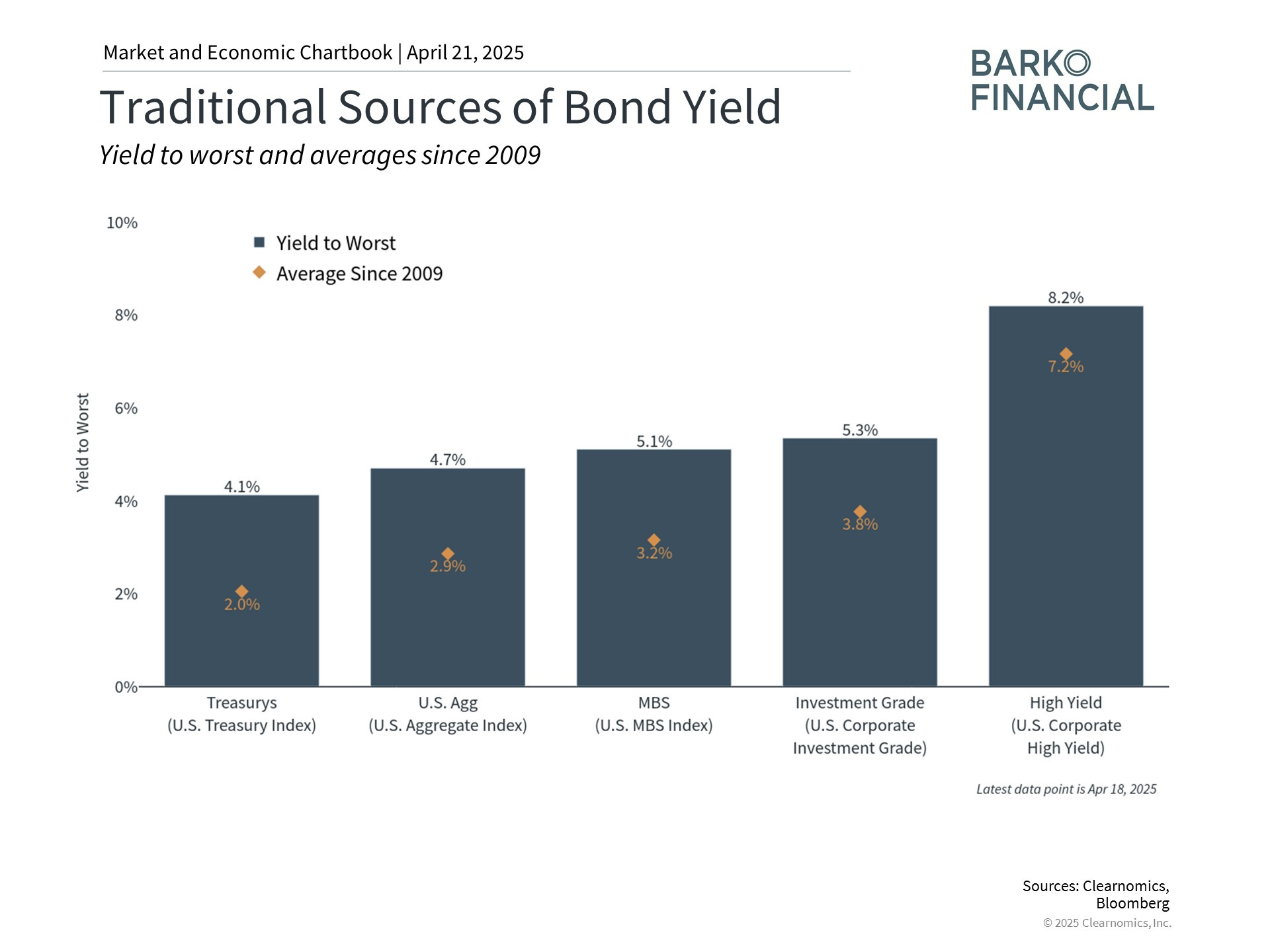
Regardless of near-term bond price movements, yields remain attractive compared to the past twenty years, creating opportunities across fixed income markets for investors seeking portfolio income. Investment grade corporate bonds currently offer average yields of approximately 5.3%, compared to a 3.8% average since 2009.
The outlook for bonds appears favorable as the Federal Reserve is anticipated to implement additional rate cuts later this year, irrespective of how the administration dispute evolves. For income-focused investors, current yields across numerous fixed income sectors provide attractive entry points and can bolster portfolios during ongoing market uncertainty.
The bottom line? Policy uncertainties continue to disrupt financial markets. Despite recent bond market volatility, compelling yields and generally positive returns can help long-term investors achieve their financial objectives.
Click <<HERE>> to read more timely Blog Posts
Sources: