


The investment landscape has become more complex as economic worries mount. While recent market volatility has pushed major indices into correction territory, it's crucial to maintain perspective on long-term investment strategies. Market fluctuations, though unsettling, are an inherent aspect of the investment journey, and historically, maintaining steady investment approaches through turbulent periods has proven beneficial for reaching long-term financial objectives.
Economic pressures impact consumer outlook
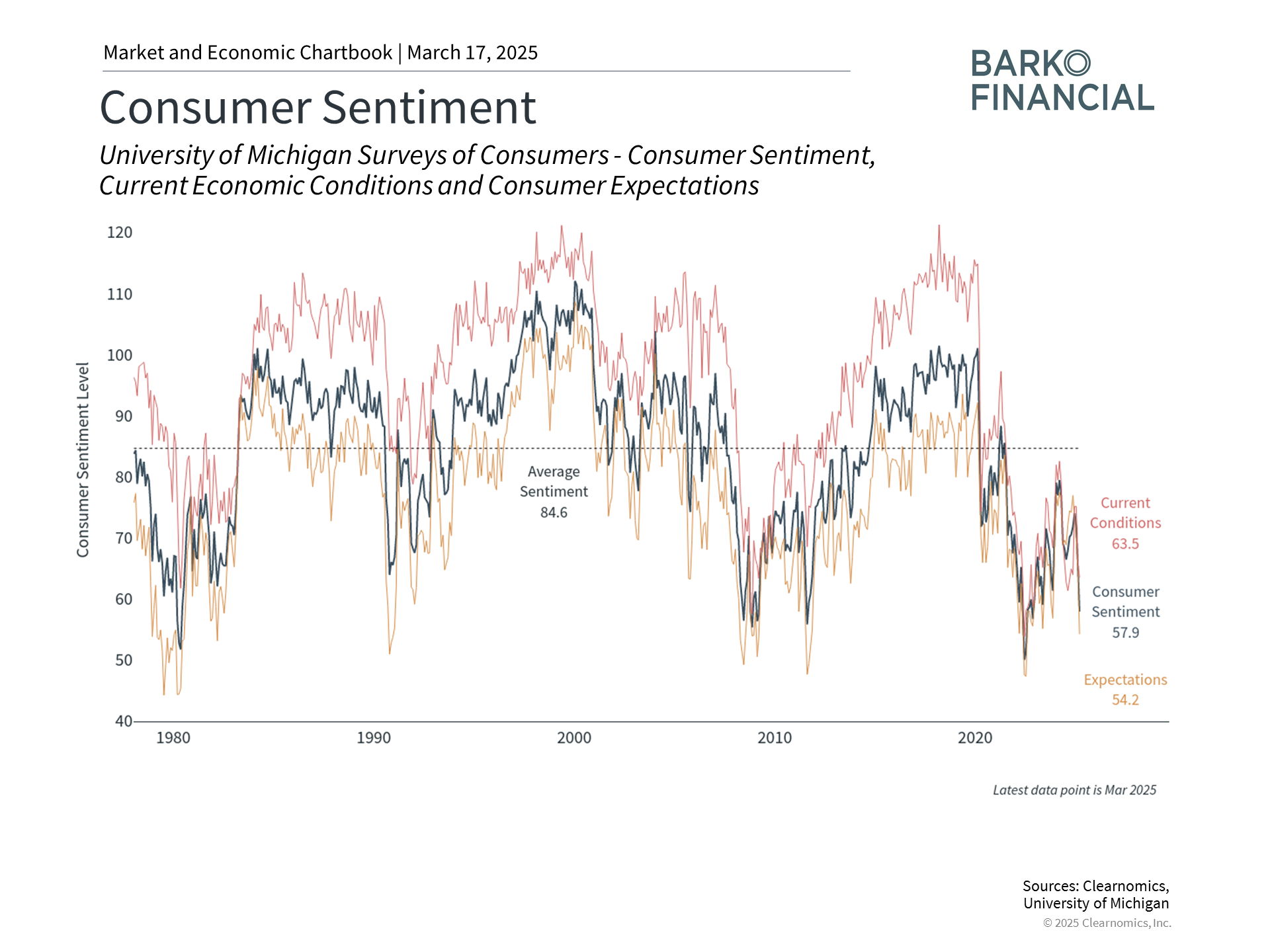 |
Consumer confidence plays a pivotal role in economic health, particularly since consumer activity generates over two-thirds of annual GDP. The relationship between consumer sentiment and economic performance is straightforward - confident consumers drive economic growth through increased spending, while uncertainty typically leads to reduced expenditure.
The latest University of Michigan Surveys of Consumers indicates a significant decline in consumer sentiment to 57.9, down from 79.4 last year, approaching the 50.0 low point seen in mid-2022. Consumer inflation expectations reaching 4.9% for the coming year have contributed substantially to this decline.
The introduction of tariffs has added another layer of economic uncertainty, particularly regarding inflation. Previous experience, such as the price increases in washing machines following 2018 tariff implementation, demonstrates how trade measures can impact consumer prices. Businesses facing higher import costs must weigh various options, including cost absorption, supplier negotiations, or consumer price adjustments.
An interesting paradox has emerged in recent years: despite low consumer confidence, spending patterns have remained relatively strong, though February's retail sales data shows some categorical decreases. This disconnect between sentiment and spending behavior requires broader analysis.
The robust job market helps explain sustained consumer spending despite low confidence. With unemployment at 4.1% and 7.7 million job openings creating more than one position per unemployed person, employment security can bolster spending confidence. The competitive job market also tends to support wage growth.
Another notable trend is the shift in consumer preferences toward services rather than goods. Consumer Price Index data reveals above-average inflation in services while many goods prices have decreased. This reflects a growing preference for experiences and services over physical products.
Consumer financial metrics show mixed signals
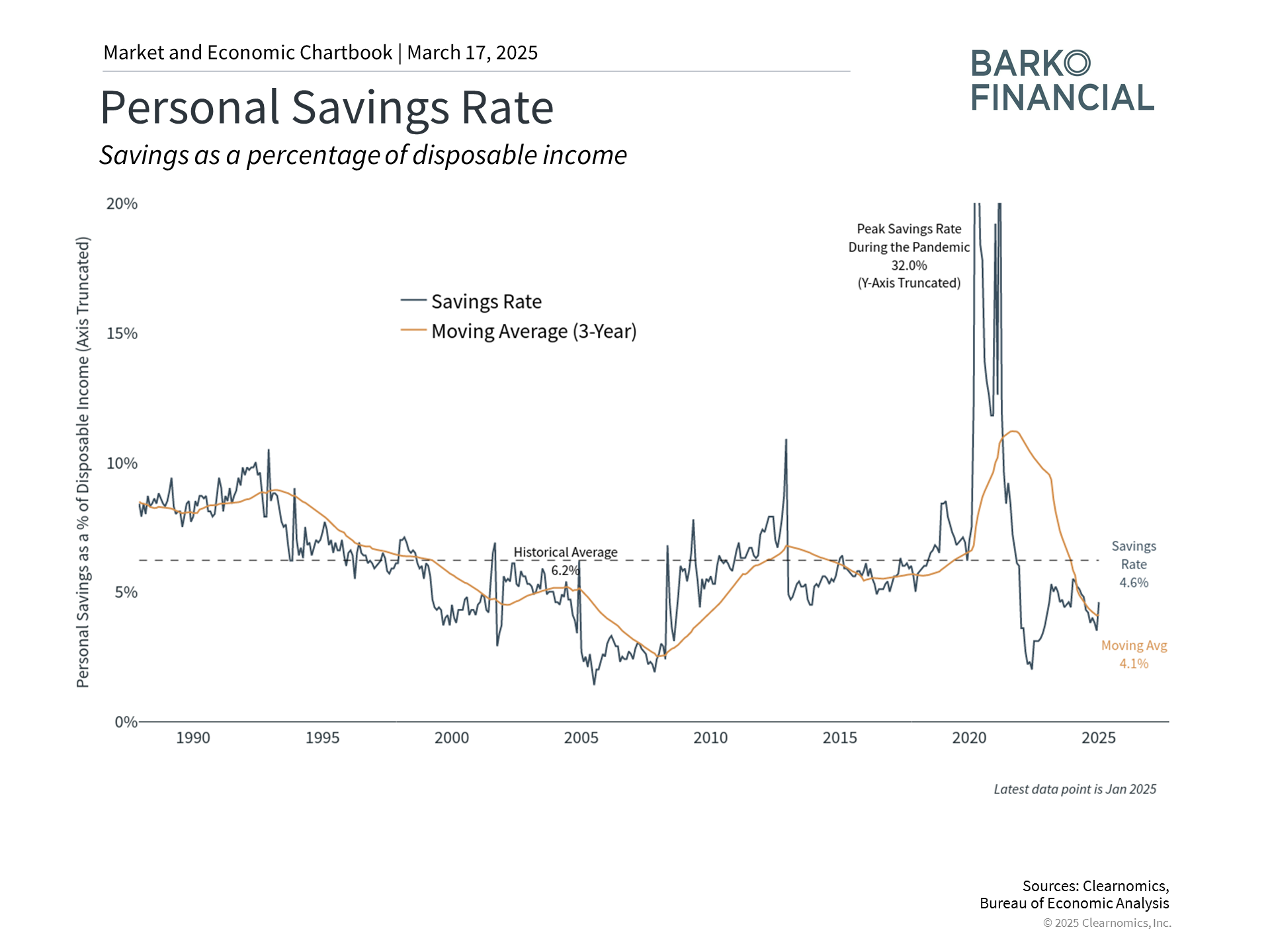 |
Current household savings rates of 4.6%, while showing improvement, remain below the 6.2% historical average. This indicates consumers are prioritizing spending over building emergency funds, choosing to use additional income beyond inflation-related expenses.
Consumer debt levels have attracted attention, with credit card balances reaching $1.2 trillion in Q4 2024. However, this figure requires context - aggregate debt typically grows with population and economic expansion. While consumer credit as a percentage of income has increased, it hasn't reached alarming levels.
Overall household wealth remains strong
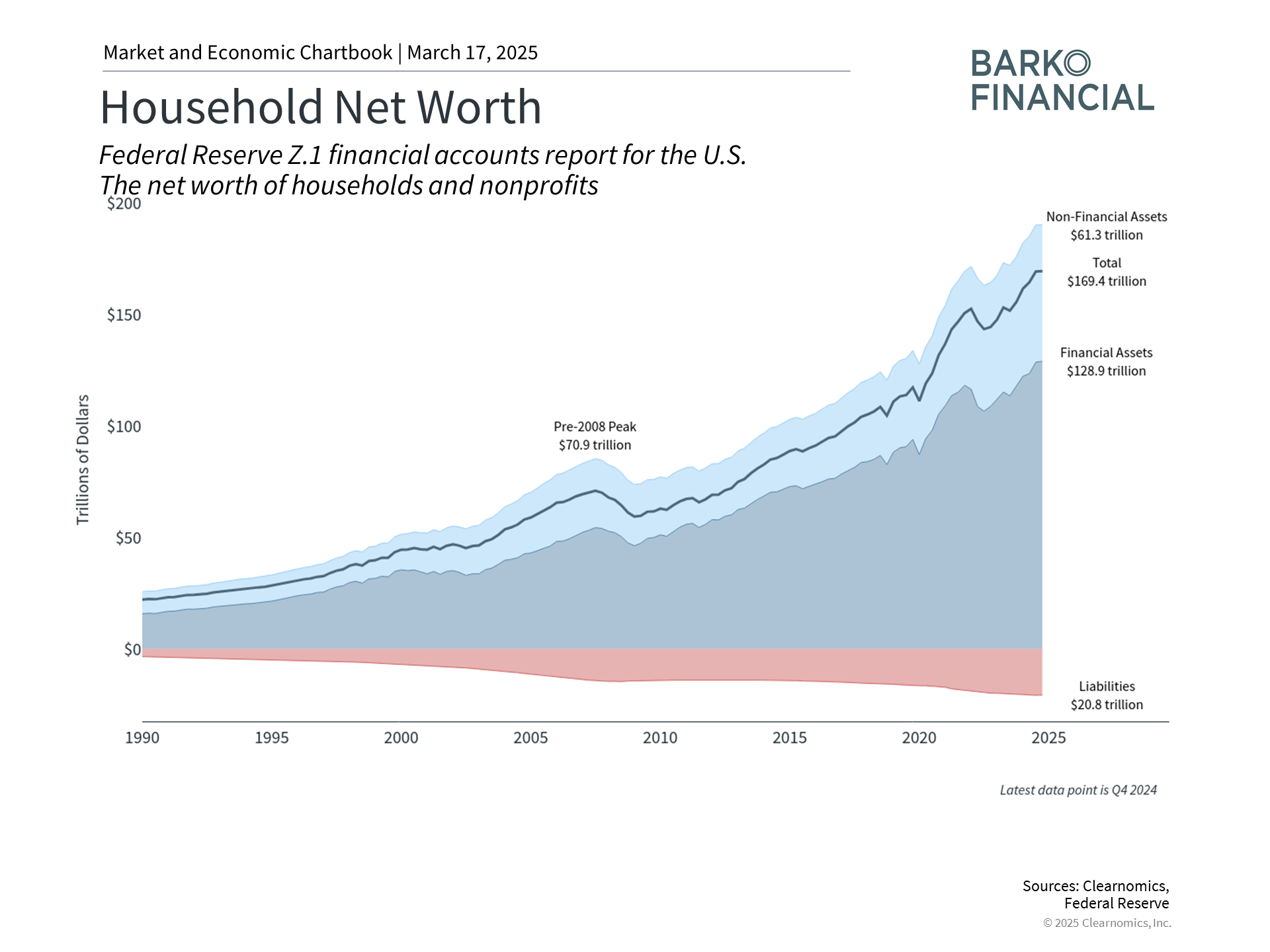 |
U.S. households are maintaining record-level net worth, supported by strong asset valuations and real estate markets. This wealth effect typically encourages increased consumer spending.
However, it's essential to note that wealth distribution isn't uniform across economic segments, with some households still facing financial challenges despite positive aggregate statistics.
While these economic indicators don't guarantee recession prevention, they suggest greater economic resilience than some might expect.
The bottom line? Consumer financial health remains generally strong despite current economic concerns and market volatility. This highlights why investors should consider broader economic indicators before making short-term portfolio adjustments.