


Recent escalations in Middle Eastern geopolitical tensions have generated significant market uncertainty and investor concern. Following Israeli military actions against Iranian nuclear and defense installations beginning June 13, Iran responded with retaliatory strikes. The situation intensified further when U.S. forces targeted Iranian nuclear facilities on June 21. These developments continue to evolve rapidly, with multiple perspectives on potential future actions. This escalation occurs alongside ongoing conflicts in Gaza and other regional disputes worldwide.
While humanitarian impacts remain the primary concern, investors must understand how such events influence financial markets. A key worry centers on whether these conflicts might expand into broader global warfare, particularly given direct U.S. involvement. However, historical precedent suggests containment is more likely. Previous major conflicts, including the Ukraine invasion, the Hamas attack on Israel, and the Afghanistan war, remained regionally focused, generating only temporary market disruptions.
This observation doesn't minimize the gravity of these situations, but rather emphasizes that portfolio overreactions can prove counterproductive. During such periods, maintaining perspective and focusing on historical lessons and long-term market patterns becomes crucial. How should investors approach maintaining discipline during these volatile times?
Regional instability has intensified
 |
Current developments represent a significant escalation in regional tensions. Israeli operations targeted Iranian nuclear infrastructure and military leadership, with reports confirming damage to uranium processing facilities. Iran's response included missile and drone strikes, some reaching Israeli territory. Subsequently, U.S. forces struck three major Iranian nuclear sites: Fordo, Natanz, and Isfahan. The conflict has also impacted critical infrastructure in both nations, affecting natural gas installations and petroleum refineries.
While oversimplified, historians typically view each event as distinct, with unique narratives, origins, and outcomes. Economists often seek patterns and commonalities between events to derive broader insights. Investors benefit from both approaches to understand which lessons apply. The familiar adage suggests that while history may not repeat exactly, it frequently echoes previous patterns.
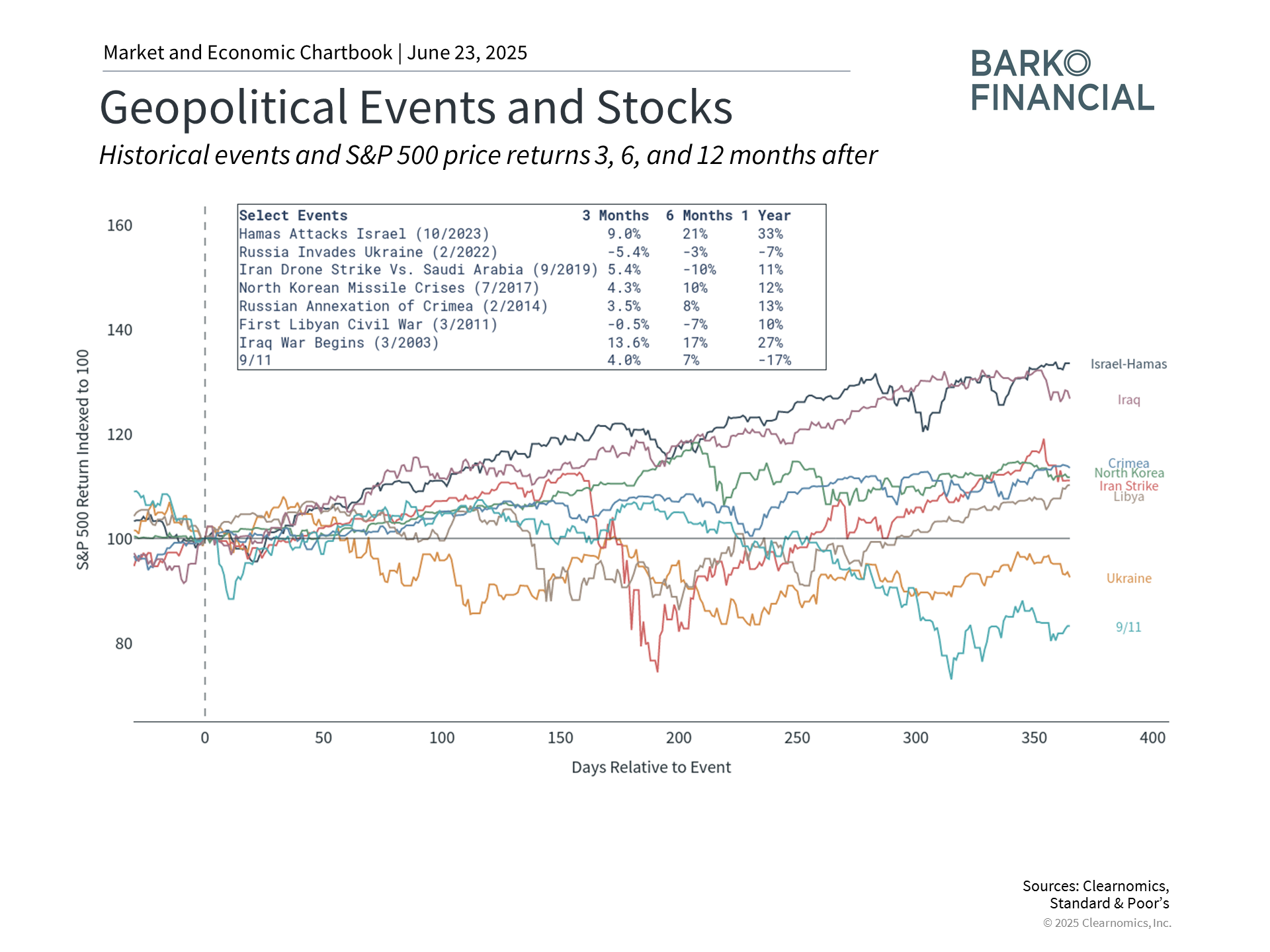
The accompanying chart offers historical context on geopolitical events spanning the last 25 years. This encompasses Middle Eastern conflicts affecting oil markets, such as the 2019 Iranian drone attacks on Saudi Arabian facilities. These periods demonstrate that while short-term market fluctuations occur, markets typically recover from geopolitical disruptions, often within weeks or months. Underlying business cycle trends proved more significant during these intervals.
Energy markets have experienced significant fluctuations
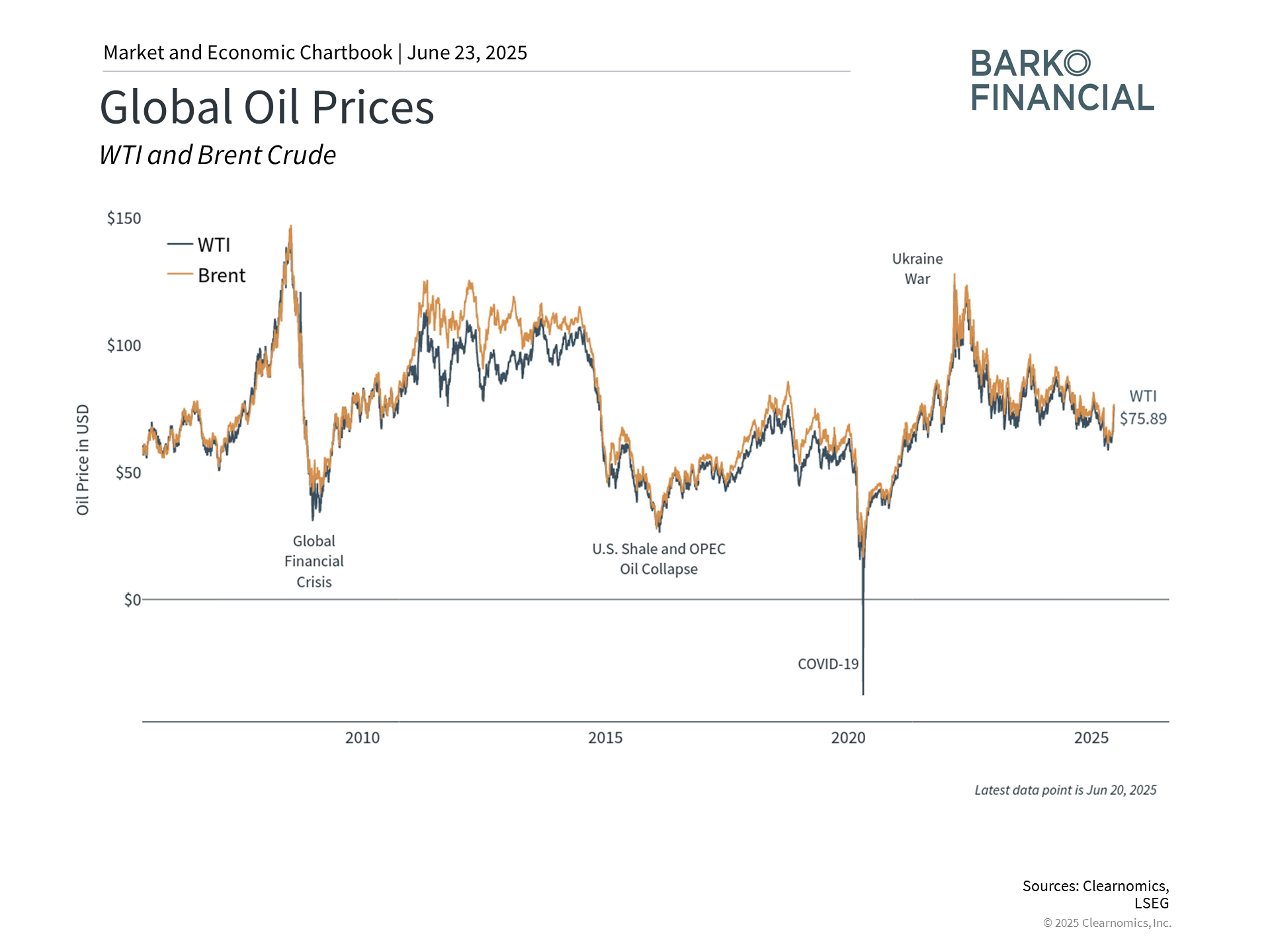 |
Oil prices serve as a primary channel through which regional conflicts impact global markets in the near term. Initial market responses to the latest conflict centered on energy sectors, with Brent crude futures climbing above $74 per barrel. While prices remain unstable, they retreated toward $70 per barrel amid potential de-escalation signals.
Oil price movements affect the global economy as energy remains a substantial input for all goods and services. Elevated oil costs translate to higher gasoline and transportation expenses, increasing costs for consumers and businesses alike. Potential disruptions to crucial shipping routes compound these concerns, particularly the Strait of Hormuz in the Persian Gulf. This strategic waterway facilitates approximately 25% of global oil shipments.
Nevertheless, maintaining perspective on current oil price levels remains important. While recent volatility is noteworthy, prices stay well below 2022 peaks during the early Russia-Ukraine conflict period, when oil exceeded $120 per barrel. Current mid-$70s levels fall within ranges experienced in recent years. This year alone, oil prices have varied between $60 and $82 per barrel.
Additionally, U.S. energy independence has grown substantially over two decades. American oil production now surpasses 13.5 million barrels daily. Many might be surprised that the U.S. leads global production in both oil and natural gas. While the U.S. continues importing foreign oil and remains sensitive to global pricing, substantial domestic supply helps shield the American economy and financial markets.
War's portfolio impact correlates with economic cycles
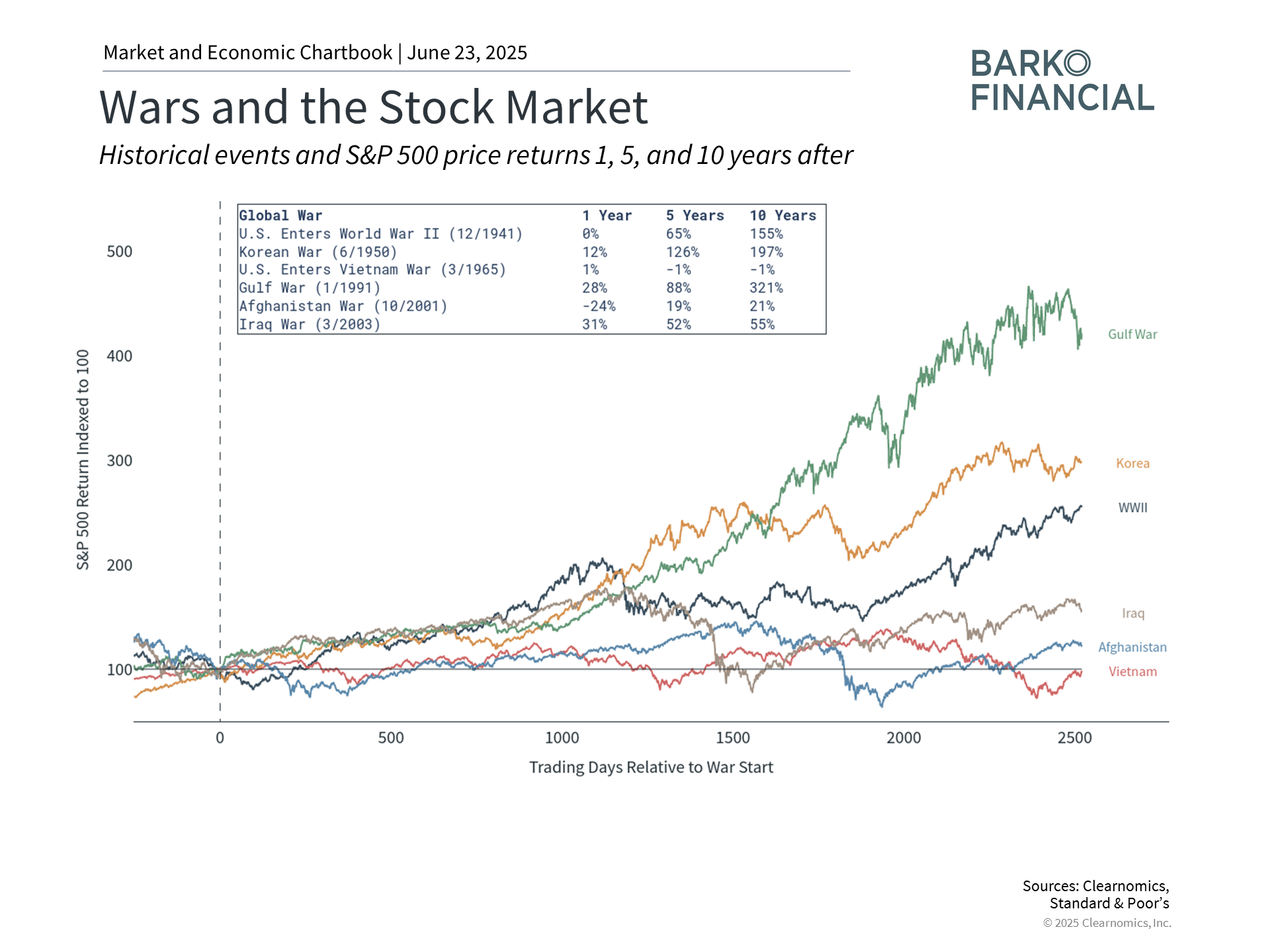 |
For investors concerned about escalating global conflicts, adopting a broader perspective proves helpful. From World War II through the Iraq War, markets may have responded to conflicts short-term, but investment fundamentals drove long-term performance.
World War II, for instance, revitalized industrial production following the Great Depression and significantly transformed labor markets as women joined the workforce. These developments helped drive economic growth throughout the remaining century. The Gulf War impacted oil prices but coincided with the 1990s Information Technology revolution. Conversely, the post-Vietnam War decade aligned with elevated oil prices and stagflation, producing weak market returns.
Again, this analysis doesn't diminish the humanitarian and social consequences of warfare. For current circumstances, outcomes will largely depend on whether conflicts expand or begin de-escalating. Major power involvement and threats to critical supply chains add complexity, yet history indicates even substantial regional conflicts typically have limited long-term effects on global financial markets.
The bottom line? Although Middle Eastern tensions have generated short-term market volatility, investors should maintain perspective and resist overreacting to news headlines. Portfolios aligned with long-term financial objectives remain the optimal strategy for navigating geopolitical uncertainty periods.
Click <<HERE>> to read more timely Blog Posts
The content of this article was provided by Clearnomics and is used with permission. Copyright (c) 2025 Clearnomics, Inc. All rights reserved. The information contained herein has been obtained from sources believed to be reliable, but is not necessarily complete and its accuracy cannot be guaranteed. No representation or warranty, express or implied, is made as to the fairness, accuracy, completeness, or correctness of the information and opinions contained herein. The views and the other information provided are subject to change without notice. The opinions expressed do not necessarily reflect those of StoneX Securities, Inc. This material is for informational purposes only and does not constitute investment advice. Please consult with a financial professional to discuss your individual situation.