The U.S. dollar affects all aspects of financial markets, the economy, and everyday life. Not only is the dollar an important unit of currency used to purchase goods and services, but its value is also affected by expectations around interest rates, inflation, trade, and more. While many Americans prefer a stronger dollar since this reduces the cost of travel and imports, a weaker dollar can benefit businesses that operate around the world, boosting revenues from exports. Understanding the factors impacting its value is important since currency movements are key components of portfolio returns. While the dollar fell when tariffs were enacted last year, it has been stable since then and has even appreciated in recent weeks. Concerns related to the national debt and monetary policy naturally create uncertainty for the dollar, and can boost other assets such as gold and Bitcoin that are seen as dollar alternatives. These trends are connected by the so-called "debasement trade," or the idea that government policies will persistently weaken the dollar. While this idea has captured investor attention over the past few years, recent developments suggest the story is more complex. Understanding why requires a closer look at the factors driving these asset classes, and how each fits within a well-constructed portfolio. The dollar has stabilized over the past year1
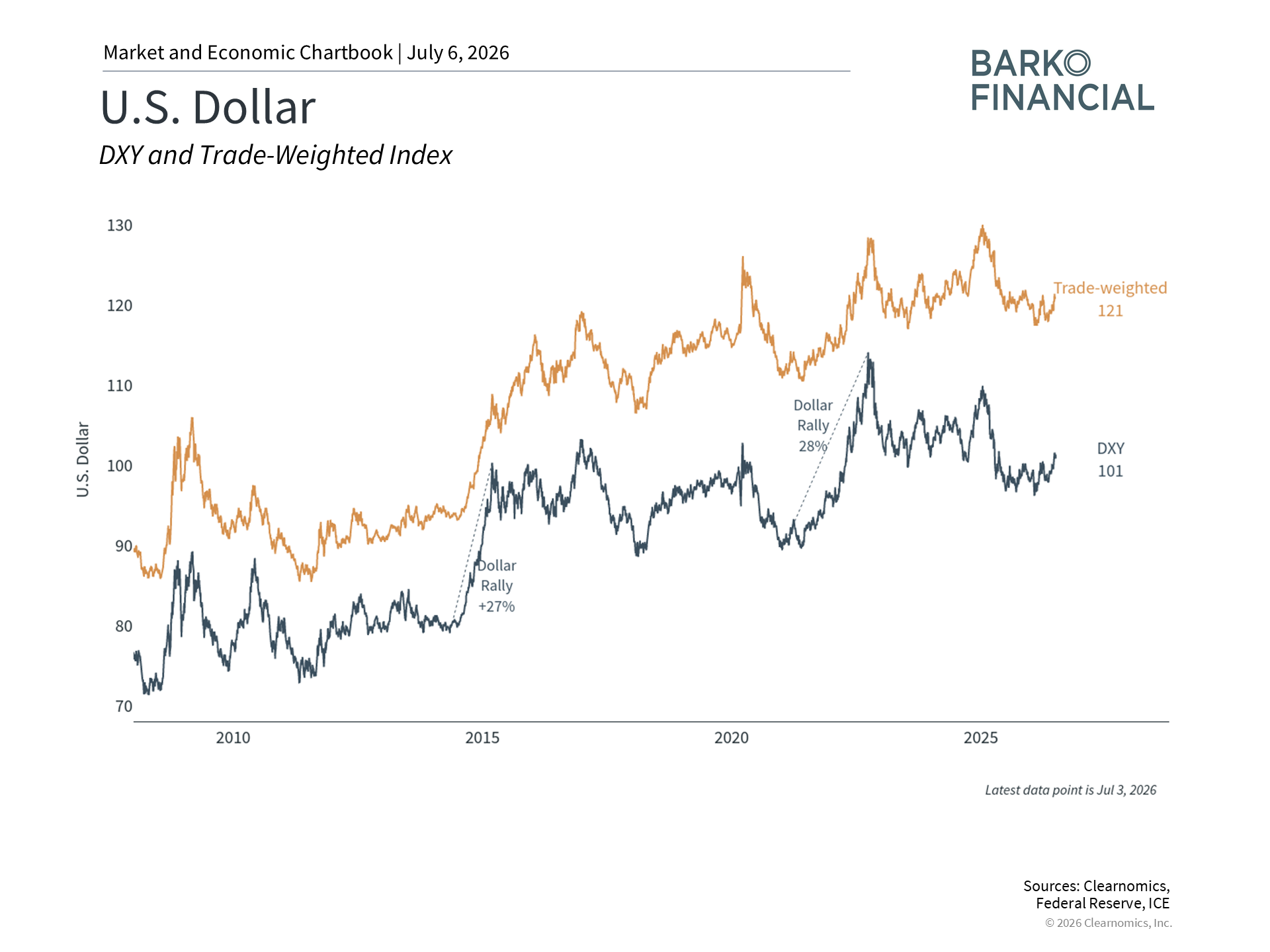
The dollar's decline in 2025 was driven by a combination of tariffs, concerns over fiscal deficits, and expectations around Fed policy. The reaction to tariffs was unusual, since the textbook effect of higher tariffs, which reduce imports and thus the need to sell U.S. dollars, should be to strengthen the currency. Instead, the opposite occurred as businesses, countries, and central banks around the globe diversified away from the dollar due to the significant uncertainty that these new trade policies created. At its low point, the dollar index fell well below 100 for the first time in several years. It has stabilized and recovered since then, and remains much stronger than historical levels. Several factors have contributed to the dollar's recent recovery. First, the Federal Reserve did not rush to cut interest rates despite concerns with the job market. In fact, expectations shifted to the possibility of rate hikes, which support the value of the dollar. The possibility of higher interest rates in the U.S. relative to other countries also tends to attract capital flows into dollar-denominated assets, boosting the currency further. Second, the Japanese yen has weakened dramatically, recently touching a 40-year low near 163 yen per dollar.2 This reflects a significant gap between interest rates in the U.S. and Japan, where the Bank of Japan has been raising rates only gradually. A weak yen effectively makes the dollar look stronger by comparison, even if the dollar loses ground against other major currencies. While Japanese officials may intervene to support the yen, this has historically only provided temporary relief. This is because the differences in Japanese interest rates are driven by deeper challenges such as an aging demographic and slower economic growth. Third, geopolitical uncertainty, including the conflict with Iran, has periodically driven investors toward the dollar as a safe-haven asset. The recent memorandum of understanding between the U.S. and Iran has reduced some of that safe-haven demand, and is a reminder that currency movements can shift quickly in response to geopolitical developments. Importantly, the dollar remains the world's dominant reserve currency, and its role in global finance is deeply entrenched. Similar concerns about the dollar's future arose during Japan's rise in the 1980s, after the introduction of the euro, and amid China's economic expansion. In each case, the dollar retained its central role. The renminbi and cryptocurrencies may gradually gain ground over time, but this will be a slow process measured in decades rather than years. Gold has pulled back sharply from its highs
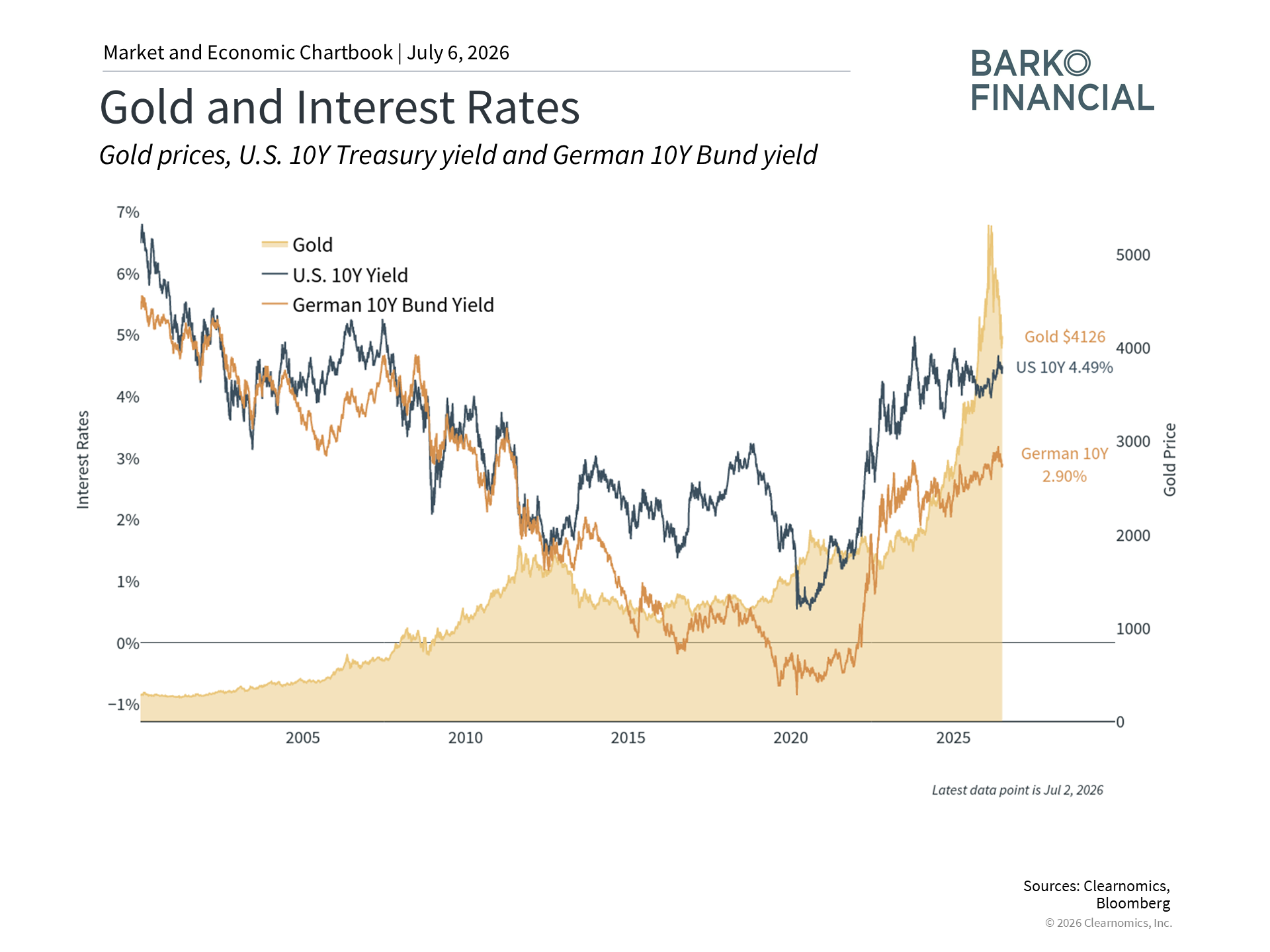
These same factors have driven gold’s decline from $5,400 to around $4,100, a sharp reversal for an asset that was widely viewed as a way to hedge fiscal concerns, currency weakness, and geopolitical risk.3 Over the past two years, gold benefited from many supportive factors including a weaker dollar, rising central bank purchases as countries sought to diversify reserves away from dollar assets, geopolitical tensions, and growing investor interest in assets perceived as stores of value. These factors pushed gold to levels that already reflected a great deal of optimism about continued gains. As the dollar has stabilized and partially recovered, the value of gold has reversed. At the same time, the partial easing of geopolitical tensions following the U.S.-Iran agreement has reduced safe-haven demand for gold. And with the Fed holding rates steady rather than cutting, the opportunity cost of holding gold, which generates no income, has increased. Gold, like many other commodities, is prone to boom-and-bust cycles. For example, after surging during the stagflation of the late 1970s, gold peaked above $800 per ounce in 1980 and did not reach that level again until 2007. After the 2008 financial crisis, gold doubled to nearly $1,900 per ounce by 2011, then fell back toward $1,000 over the following years, even as the Fed maintained accommodative policy. Bitcoin has struggled even as stocks have risen
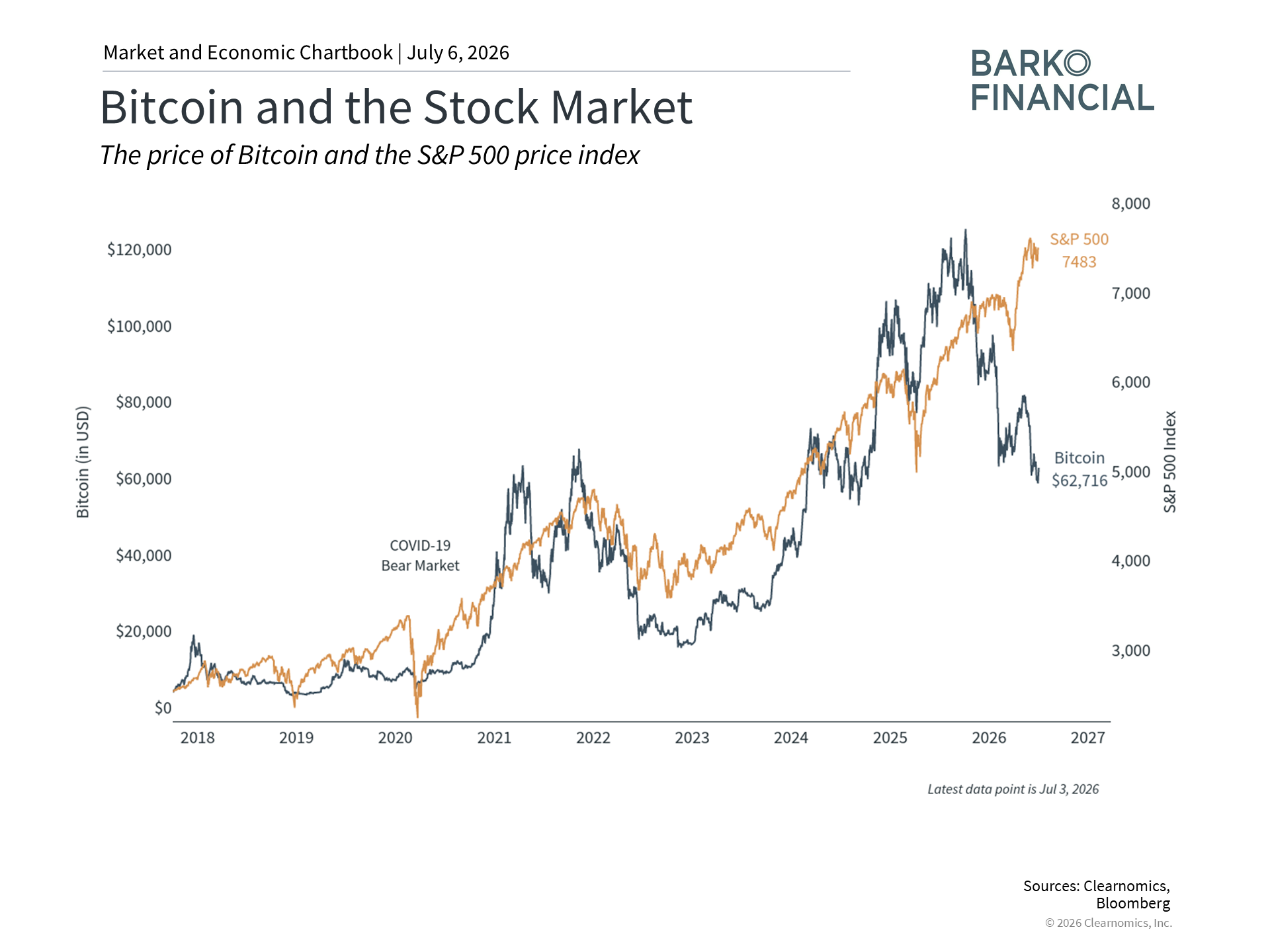
While some invest in Bitcoin as an alternative to the dollar and other traditional asset classes, the reality is that it has not behaved like a safe haven asset. In fact, it is very difficult to characterize or predict how Bitcoin will behave, other than the fact that it is often correlated with the broader market. Specifically, Bitcoin and other cryptocurrencies tend to be highly volatile, rising when risk appetite is strong and falling due to uncertainty. Bitcoin's recent behavior may be puzzling to investors who had expected it to benefit from the same concerns that briefly drove gold higher. While it did reach a new all-time high of around $125,000 last October, it has since fallen to around $60,000. This has occurred even as the broader stock market has rallied in recent months, driven in particular by AI-related stocks. This volatility and uncertainty is why it’s important to view Bitcoin and similar assets as individual components of a broader, balanced portfolio. Like gold, Bitcoin generates no passive income and its value depends entirely on price appreciation. Unlike gold, it has a much shorter track record and remains subject to significant uncertainty. Price swings of 50% or more in either direction over the course of a year are not unusual for Bitcoin, as seen recently and in 2022. The broader point for long-term investors is that the value of any individual asset, whether the dollar, stocks, bonds, gold, or Bitcoin, should be viewed in the context of a portfolio. Each of these assets has characteristics that can contribute to portfolio outcomes in different environments. Investing in the right mix of asset classes that is aligned with long-term financial goals, is the best way to achieve growth and manage risk. The bottom line? The dollar, gold, and Bitcoin have all experienced swings over the past year, reflecting shifting views on economic growth, geopolitics, and monetary policy. Investors should continue to maintain a portfolio perspective and stay focused on long-term goals. References 1. Based on the DXY index as of July 3, 2026 2. https://www.cnbc.com/2026/06/30/japan-yen-falls-lowest-level-since-1986-dollar-intervention-risk.html 3. From January 28, 2026 to July 3, 2026 Index Descriptions DXY The DXY is a U.S. dollar index based on a basket of currencies, including the Euro, Yen, Pound, Canadian Dollar, Swedish Krona and Swiss Franc. | |||
Click <<HERE>> to read more timely Blog Posts The content of this article was provided by Clearnomics and is used with permission. Copyright (c) 2026 Clearnomics, Inc. All rights reserved. The information contained herein has been obtained from sources believed to be reliable, but is not necessarily complete and its accuracy cannot be guaranteed. No representation or warranty, express or implied, is made as to the fairness, accuracy, completeness, or correctness of the information and opinions contained herein. The views and the other information provided are subject to change without notice. The opinions expressed do not necessarily reflect those of StoneX Securities, Inc. This material is for informational purposes only and does not constitute investment advice. Please consult with a financial professional to discuss your individual situation. |
The Dollar, Gold, and Bitcoin: Explaining Recent Volatility