


The latest trade accord between the United States and China rolls back many of the tariffs that caused market turbulence beginning in April. This 90-day arrangement reduces US tariff levels on Chinese imports from 145% to 30%, while China's rates on American products drop to 10%. Combined with tariff suspensions affecting other trading partners and a freshly negotiated trade agreement with the United Kingdom, investors are increasingly confident that an extended trade conflict may be avoided. How should this evolving market situation be interpreted by those with long-term investment horizons?1
Markets respond most negatively to unpredictability and unexpected negative developments. This occurs because financial markets typically price in worst-case scenarios immediately before adjusting as clarity improves. While the unexpected magnitude of the April 2 tariff announcements triggered a sharp market decline, we've witnessed an equally rapid recovery over recent weeks.
The markets now stand near their starting positions for the year and slightly higher than their pre-April 2 tariff announcement levels. This pattern reflects numerous historical instances where recoveries materialize once greater certainty emerges. Recent events further demonstrate why maintaining a long-term investment perspective remains crucial during periods of market uncertainty.
The US-China trade understanding signals potential for a comprehensive agreement
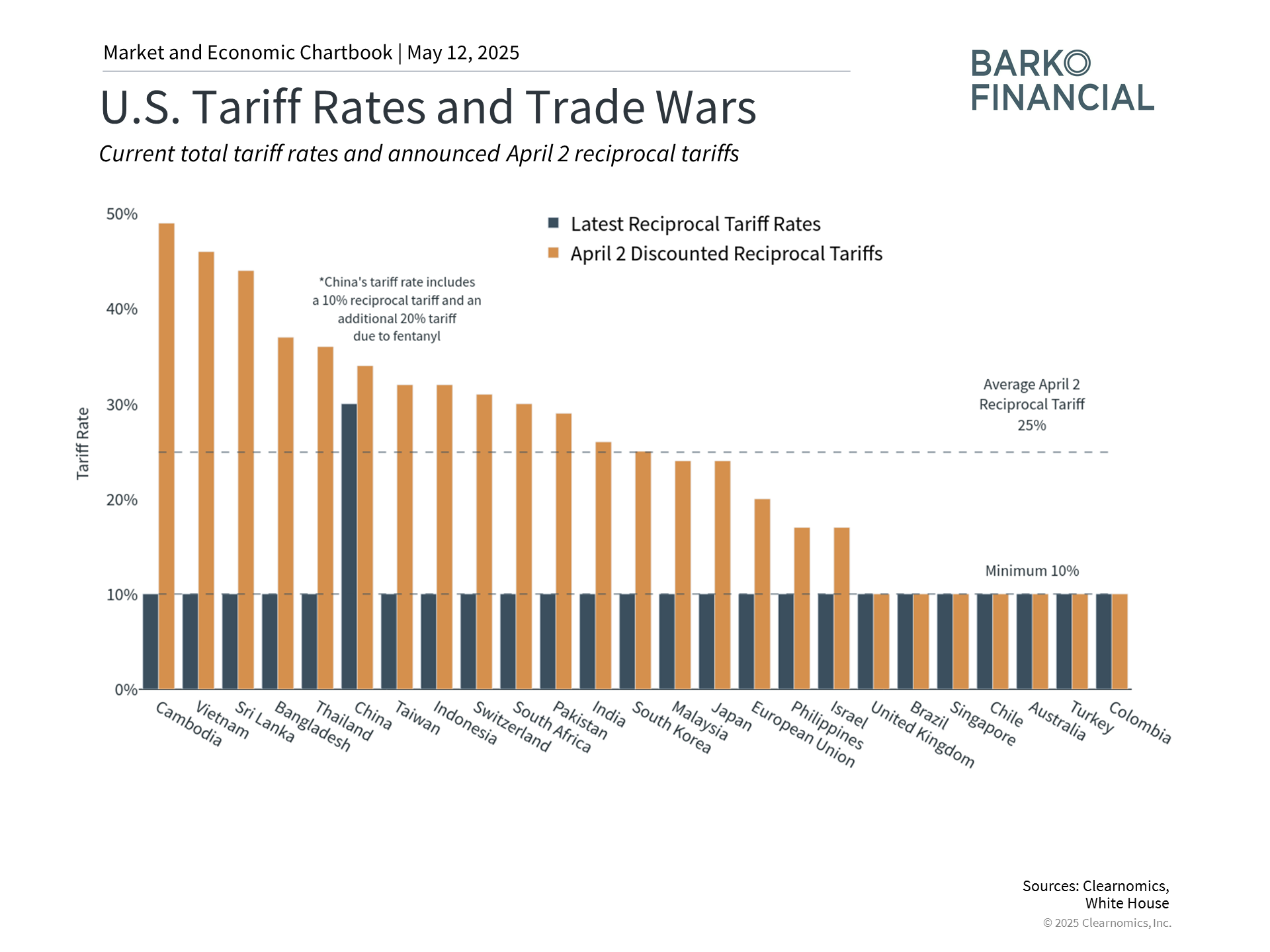 |
The newly announced tariff arrangement between the United States and China represents positive progress by eliminating a major source of market uncertainty. It establishes a reciprocal 10% US tariff on Chinese goods while preserving the 20% tariff related to the fentanyl crisis implemented earlier this year. Though circumstances continue to evolve, this agreement creates a pathway toward a more enduring trade resolution between the world's two largest economies and reduces tensions. Consequently, while tariff rates remain elevated compared to historical levels, the probability of a worst-case scenario has diminished significantly.
Looking back, current events parallel the trade tensions experienced during 2018 and 2019 in the first Trump administration. In both instances, the administration has utilized tariffs as negotiation leverage with the stated objective of reducing the US trade deficit with major trading partners. Five years ago, this approach culminated in the "Phase One" trade agreement with China, the USMCA (United States-Mexico-Canada Agreement), and additional arrangements.
These trade policies involve multiple interconnected goals, including supporting manufacturing employment, safeguarding intellectual property, managing immigration, and additional priorities. The key distinction today is that the administration has advanced tariff threats further than many investors and economists had predicted. Nevertheless, the recently finalized trade agreement between the US and UK suggests similar patterns may be unfolding now.
Economic fundamentals remain strong despite trade-related concerns
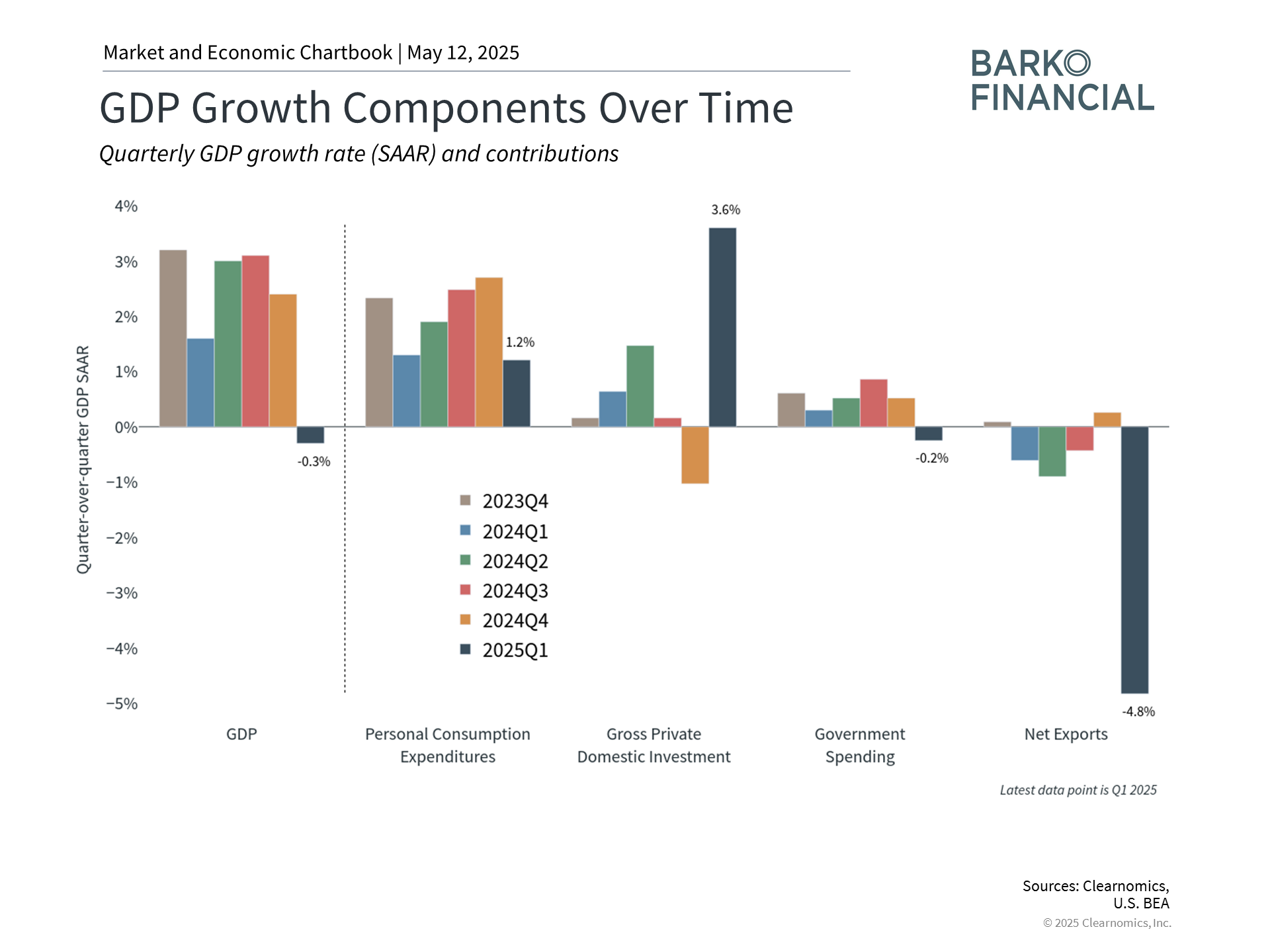 |
Naturally, comprehensive trade arrangements with China and numerous other nations have yet to be finalized, and daily headlines could continue driving market fluctuations, particularly if existing tariff pauses expire. Markets have fixated on tariffs primarily because of their implications for inflation and economic growth. This was evident in first-quarter GDP statistics showing a modest economic contraction as businesses accumulated imported inventory ahead of tariff deadlines. Greater predictability will likely benefit both consumers and businesses.
Within this environment, what positive developments might emerge? First, numerous economic indicators continue showing strength. The most recent employment report revealed the economy generated 177,000 jobs in April, exceeding expectations of 138,000.2 Unemployment remained steady at 4.2%, continuing a period of stability that began last May. This robust labor market helps counterbalance concerns that tariffs and uncertainty might impact consumer spending.3
Simultaneously, inflation continues its moderation which has been supported by declining oil prices, which recently reached four-year lows. More affordable oil, partly influenced by tariff-related volatility, reduces costs for consumers and potentially stimulates economic activity, all else being equal.
The recent US-China agreement also alleviates pressure for immediate Federal Reserve policy adjustments. Market-based measures still anticipate further rate reductions this year, but expectations have moderated to just two or three cuts, possibly beginning in July or September. The Fed, which recently maintained rates between 4.25% and 4.5%, appears to be adopting a cautious stance rather than responding reactively to short-term trade developments, market movements, and economic indicators.4
Market rebounds frequently occur when least anticipated
 |
While numerous market risks persist, recent weeks demonstrate how swiftly sentiment can shift. By their fundamental nature, markets anticipate worst-case scenarios. During periods dominated by negative headlines and market declines, envisioning a market recovery becomes challenging. Therefore, while risk assessment remains prudent, it should not compromise long-term portfolio positioning.
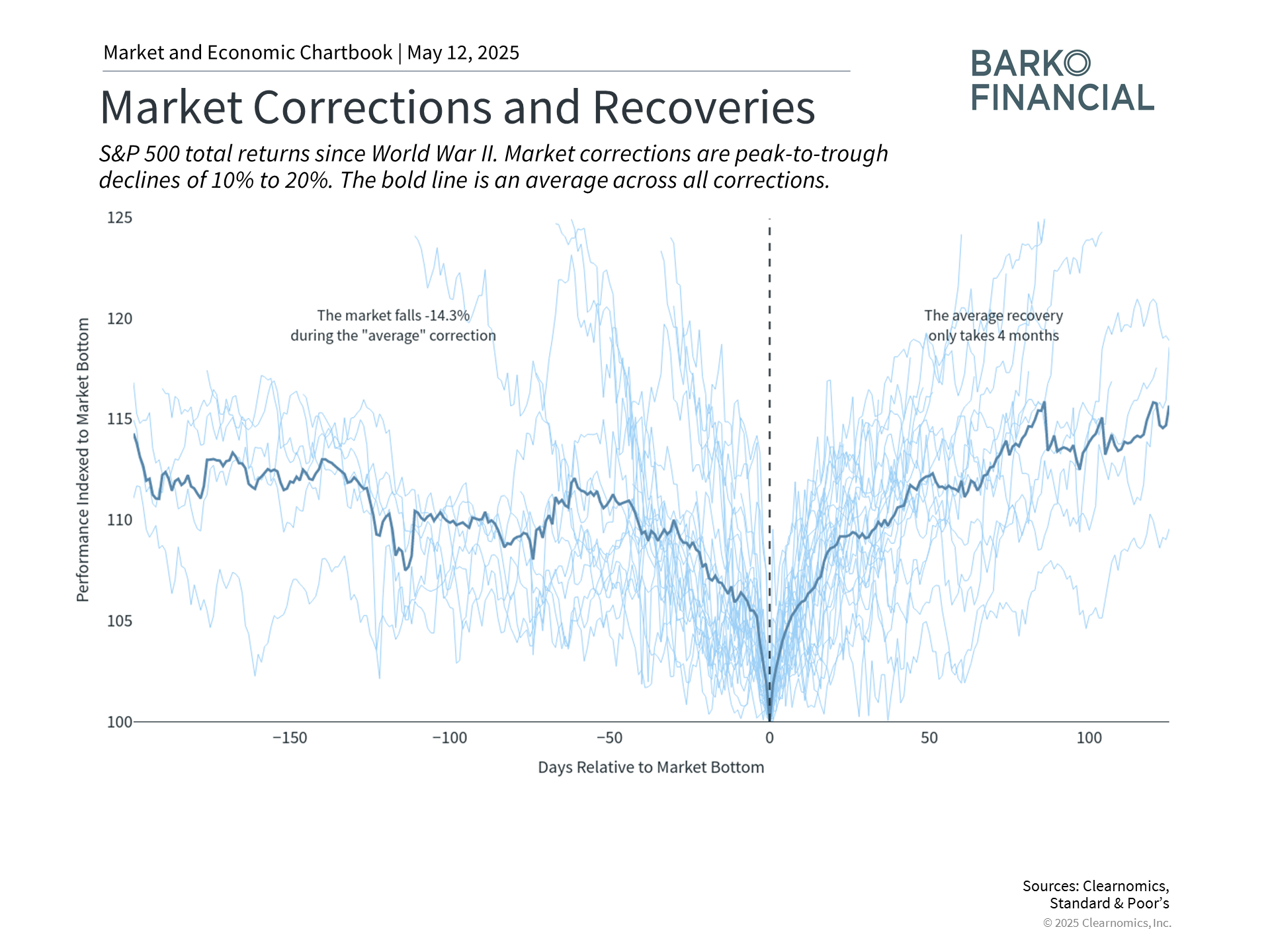
The accompanying chart illustrates historical market correction patterns since World War II. While the average correction involves a 14% decline, recovery typically occurs within approximately four months. Most importantly, markets often rebound when least expected, as we've witnessed following recent trade negotiation progress. Investors who overreact to initial volatility signals may find themselves inappropriately positioned relative to their financial objectives.
The bottom line? The recent US-China trade announcement has reduced market uncertainty and economic contraction fears. For long-term investors, this underscores the importance of maintaining perspective during market turbulence rather than reacting to temporary volatility.
Click <<HERE>> to read more timely Blog Posts
Sources:
1 - https://apnews.com/article/china-us-switzerland-tariffs-negotiations-b3f5174d086e39b2522ab848ddad9372
2 - Clearnomics, Bureau of Labor Statistics