


Markets have experienced declines this year with major indices pulling back from recent highs.1 While trade tensions have dominated headlines, investors are also concerned about mixed economic signals including weak consumer confidence, hotter inflation, government worker layoffs, and more. Some are now wondering if there will be a recession, and President Trump did not rule out the possibility in recent interviews. How can investors maintain perspective in this challenging market and economic environment?
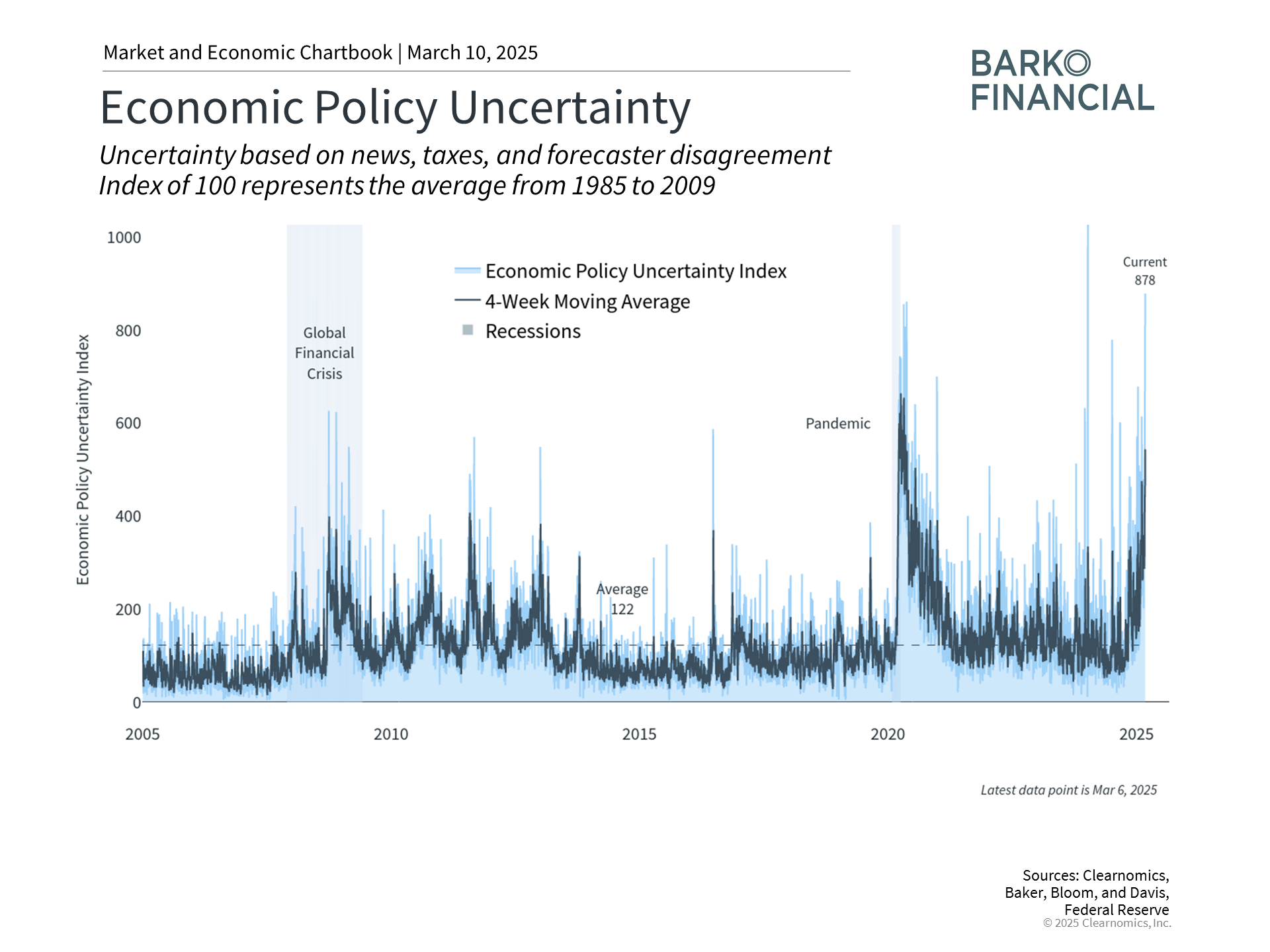
Economic policy uncertainty has reached elevated levels
 |
It's crucial to recognize that personal economic experiences and market dynamics often follow different paths. While rising prices may strain household budgets, they can create investment opportunities in certain sectors. Successful investing requires separating personal economic circumstances from the factors driving market returns.
The economy and markets share an intricate relationship. Strong economic conditions typically support corporate earnings growth and stock prices. Markets can also function as economic indicators, reflecting collective investor expectations about future conditions.
However, market predictions aren't infallible. Recession forecasts have persisted for nearly three years, with many experts incorrectly anticipating an economic downturn last year due to inflation concerns. Traditional recession indicators like the inverted yield curve and Sahm Rule haven't proven reliable in the current cycle.
Despite current market weakness, the S&P 500 has delivered gains exceeding 60% since late 2022,2 while the Nasdaq has risen 78%.3
While a recession will eventually materialize, timing such events remains challenging. Building portfolios aligned with long-term objectives, rather than short-term economic predictions, typically yields better results.
Why have concerns of a recession risen?
Recessions typically emerge during late-cycle conditions or following external shocks. While the current cycle shows some slowing, it hasn't entered contraction. Trade tensions represent a potential external shock affecting various economic participants. However, moderate economic weakness differs significantly from major events like the 2008 financial crisis.
The administration has acknowledged potential economic "turbulence." Current tariff implementation has been more aggressive than during President Trump's first term, creating heightened uncertainty as shown above. The ultimate impact depends on whether tariffs reach 1930s-era levels or if trade agreements emerge.
Tariffs often serve as negotiating tools rather than permanent policies. Historical market responses to tariff announcements have typically exceeded their actual economic impact. The 2018 experience showed strong earnings growth and GDP expansion despite tariff implementation.
While uncertainty creates market volatility, strong economic foundations can help absorb policy changes.
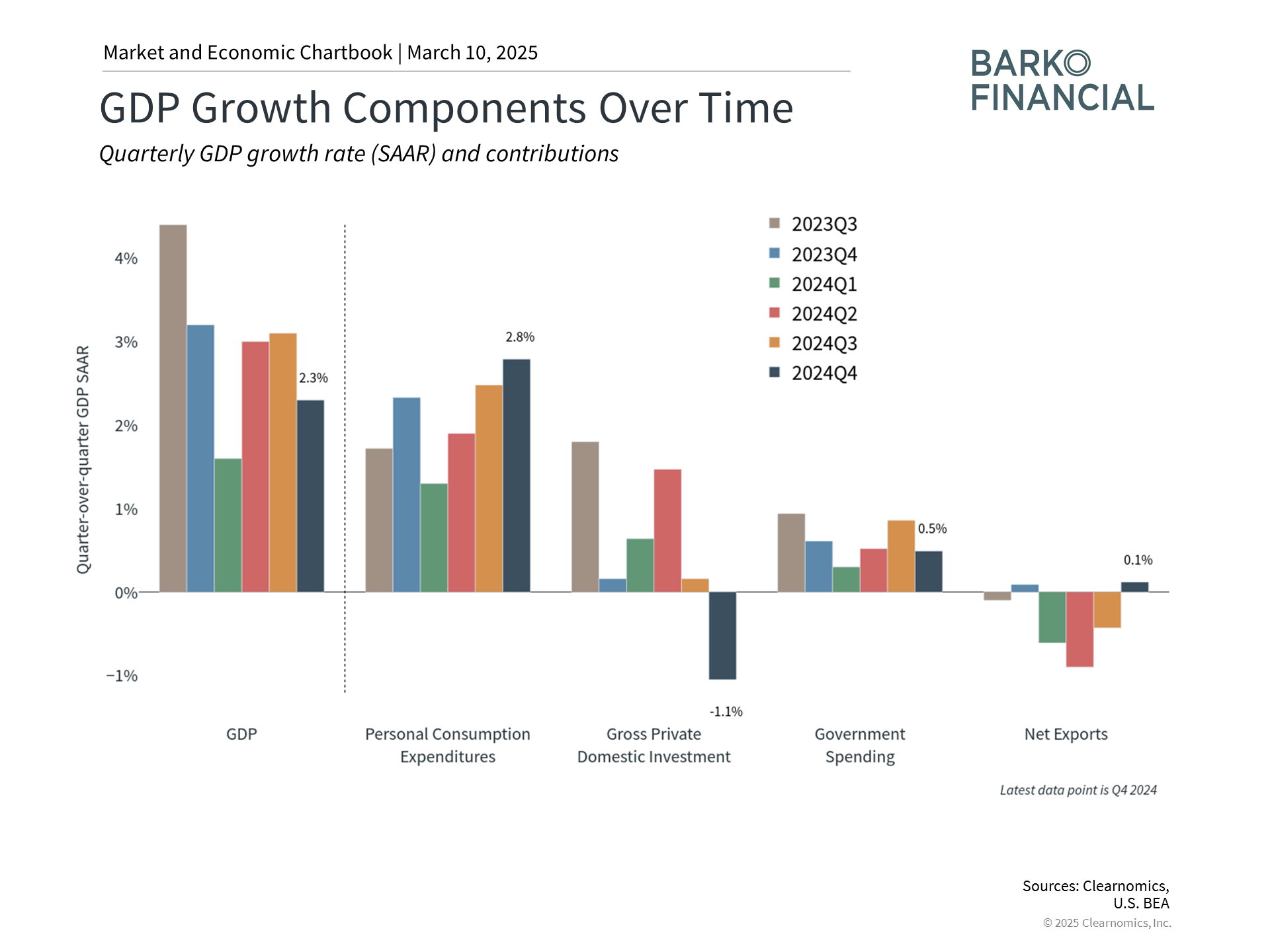
Economic growth has persisted despite ongoing concerns
 |
Recent economic indicators present a mixed picture. Inflation has reaccelerated above 3.0%, reaching levels not seen since last summer. Federal government employment declined by 10,000 in February, with more reductions expected. While federal workers represent a small portion of total employment, potential spillover effects concern investors.
Consumer sentiment has deteriorated, with five-year inflation expectations reaching 3.5% - the highest since 1995. This has contributed to pessimistic views about future financial conditions.
Interestingly, markets seem to have overlooked post-election optimism regarding manufacturing, energy, tax, and regulatory policies. Consumer spending has driven recent economic growth, as illustrated above. Some economists anticipate business investment could increase with potential TCJA extension and regulatory reforms.
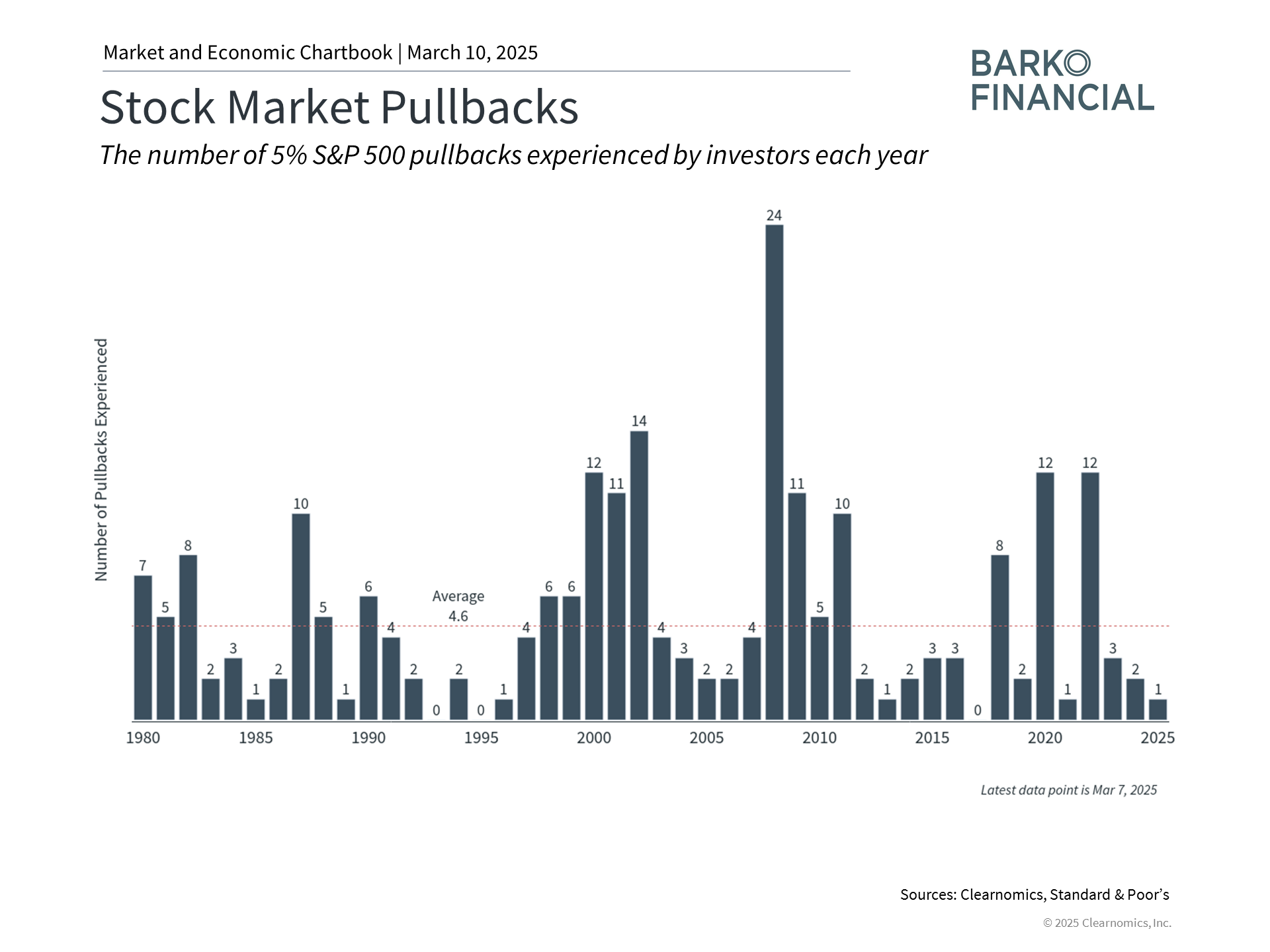
Market pullbacks are a regular occurrence during long-term advances
 |
Economic slowdowns represent natural cycle progression. However, forecasts often miss the mark, and markets frequently behave unexpectedly. Recent examples from 2020 and 2022 demonstrate how rapidly market sentiment can shift.
Market corrections occur regularly within long-term upward trends, as shown in the chart. Maintaining perspective during periods of uncertainty remains essential for investment success.
The bottom line? The possibility of a recession is back on investors’ minds but long-term investors should maintain a broader perspective. While tariffs have increased uncertainty and some economic data has been mixed, history suggests maintaining long-term investment discipline produces better outcomes than reacting to short-term fears.
Click <<HERE>> to read more timely Blog Posts
1Standard & Poor's and Nasdaq have declined 1.9% and 5.8%, respectively, as of March 7, 2025
2S&P 500 price return from September 20, 2022 to March 7, 2025
3Nasdaq Composite price return from December 22, 2022 to March 7, 2025