


2024 has proven to be a remarkable year for financial markets, offering investors numerous reasons for optimism. Despite challenges including Federal Reserve policy shifts, election uncertainty, and global tensions, market performance has been robust. The S&P 500 has delivered a 26.7% return including dividends, while the Dow and Nasdaq have gained 19.5% and 27.4% respectively. Global markets have also shown strength, with emerging markets up 9.0% and developed markets advancing 4.8%. The economy has demonstrated resilience, characterized by moderating inflation, sustained employment, and continued GDP expansion.1
Markets have shown exceptional strength throughout the year
 |
The holiday season presents an opportune moment to reflect on financial achievements, particularly in investing. This perspective is valuable since many investors tend to dwell on potential risks. Even after significant market gains over two years, concerns persist about market fundamentals, economic trajectories, national debt levels, and international stability.
Historical evidence suggests that maintaining a long-term focus remains the most effective strategy for achieving financial objectives. Markets experience short-term fluctuations, as witnessed in April and August, or during 2020 and 2022. However, longer time horizons typically yield positive results, driven by underlying economic expansion. What developments warrant recognition this holiday season?
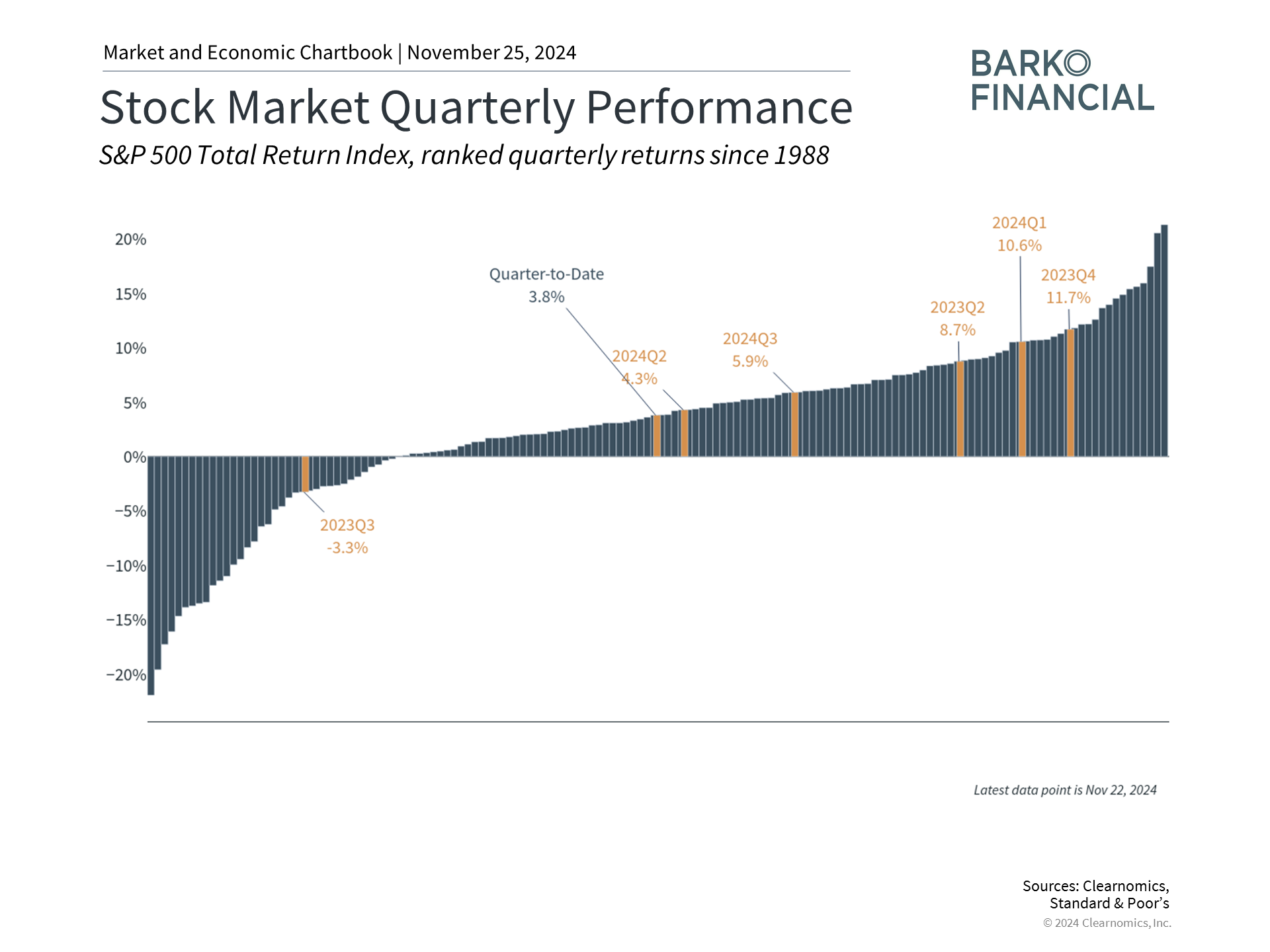
The primary highlight is the remarkable performance of U.S. equities in 2024, supported by solid corporate earnings, favorable economic conditions, and strengthened market sentiment. The chart illustrates consistent market gains across nearly every quarter over the past two years. While technology and AI-related sectors have led gains, market breadth has been impressive, with most sectors posting positive returns and eight of eleven S&P 500 sectors achieving double-digit growth.
This bull market has elevated valuations, with the S&P 500's price-to-earnings ratio reaching 22.3, approaching both recent peaks and the historical dot-com era high of 24.5.
These elevated valuations underscore the importance of maintaining a well-balanced portfolio rather than avoiding equity exposure. Risk assets require appropriate counterbalancing with instruments like bonds to achieve portfolio objectives. Year-end presents an ideal opportunity for portfolio rebalancing, particularly following substantial market movements.
Price pressures have eased to pre-pandemic levels
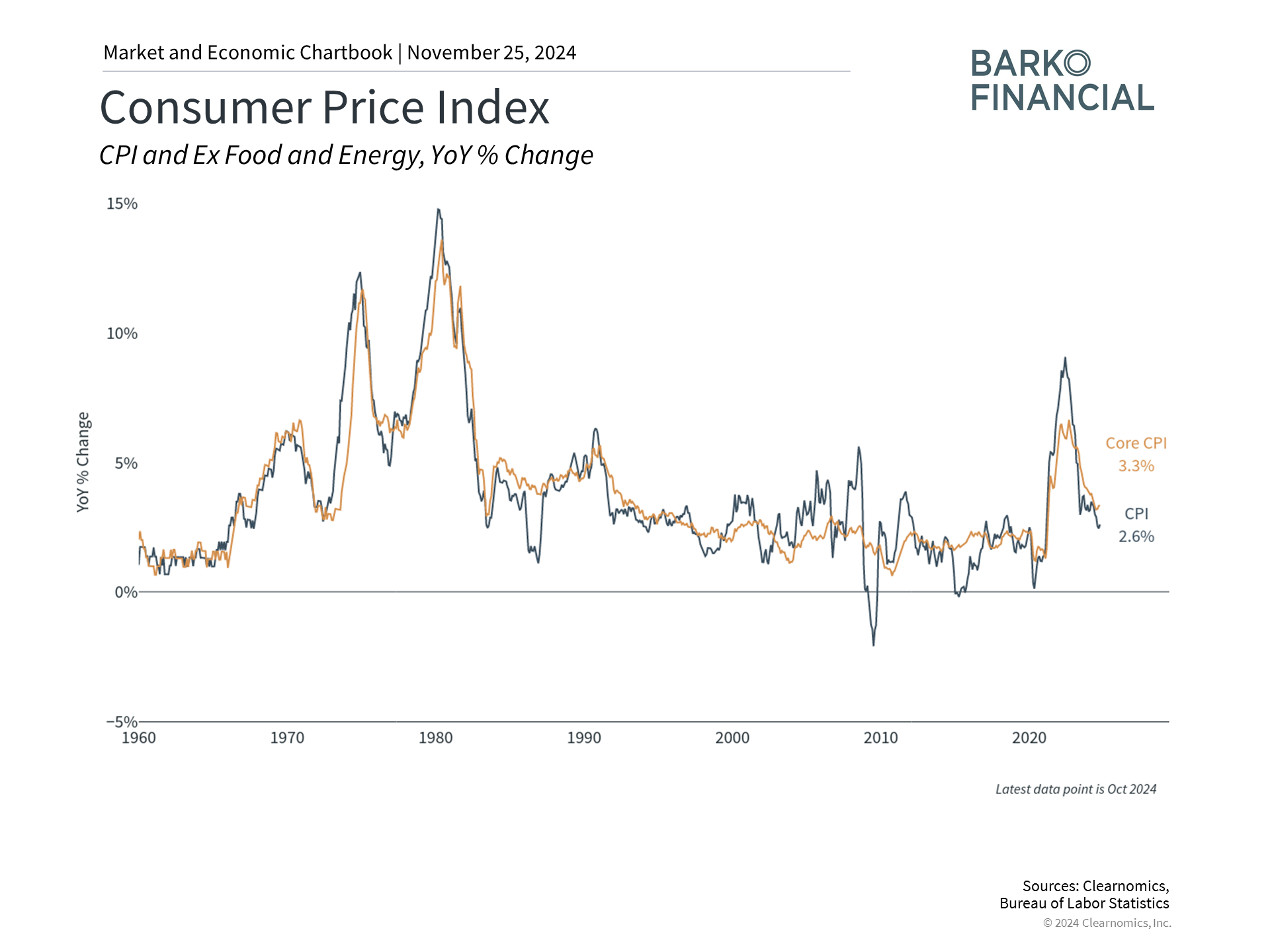 |
A second positive development is the moderation of inflation to pre-pandemic levels. While prices for essentials like food and housing remain elevated, the trend is encouraging, particularly for investment portfolios that are sensitive to interest rate movements influenced by inflation.
As inflation normalizes, the Federal Reserve has signaled potential policy rate reductions for the first time since early 2022. Much of this year's market volatility stemmed from speculation about the timing and magnitude of these adjustments.
Understanding the broader trend toward lower short-term rates proved more valuable than precise timing predictions. For long-term investors, building portfolios based on fundamental factors, rather than recent market trends, remains paramount.
Economic and employment conditions remain favorable
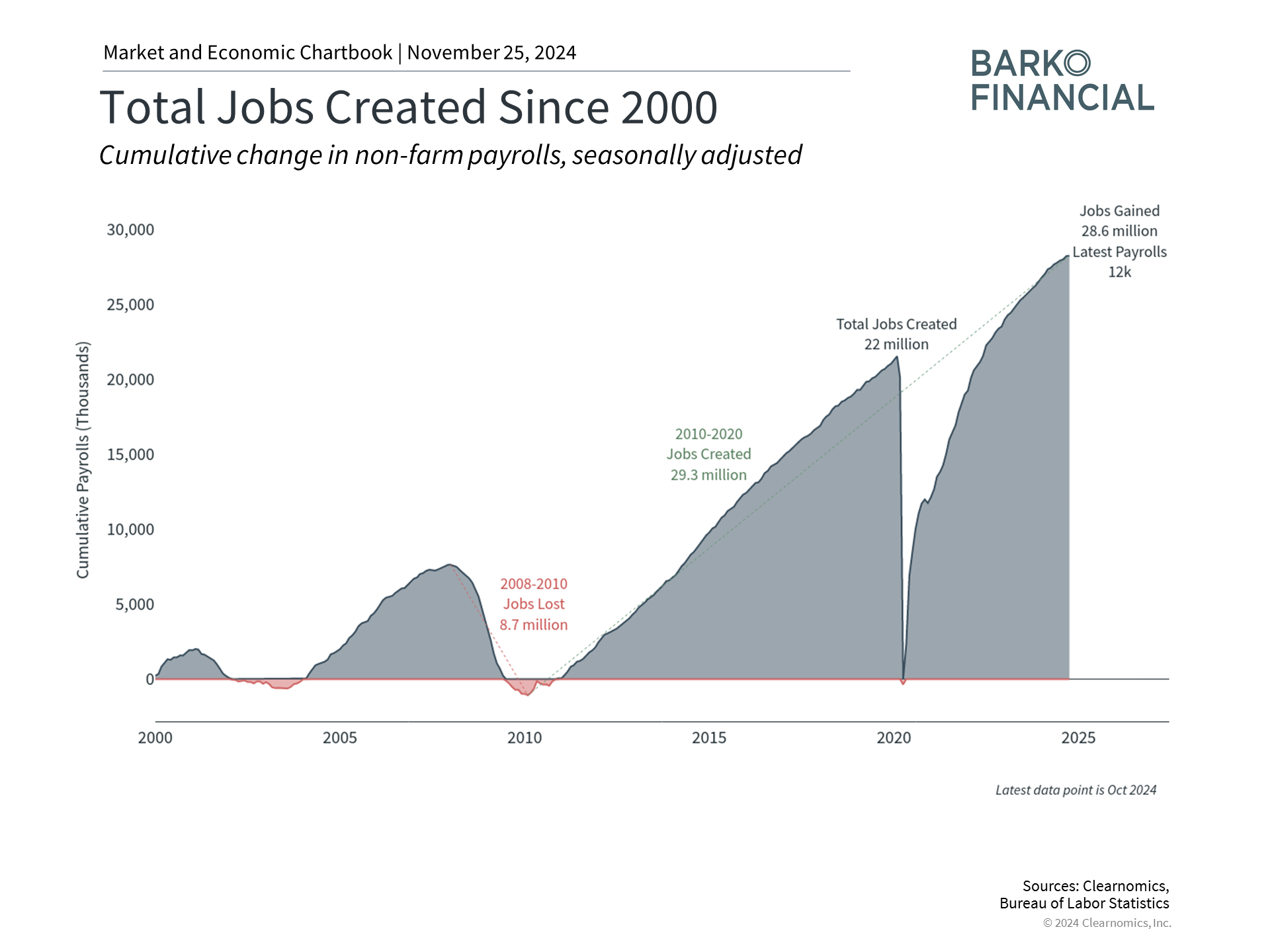 |
The robust employment market represents a crucial economic bright spot for individuals. Initial concerns about a "hard landing" scenario, where inflation reduction would trigger widespread job losses, have not materialized.
Unemployment remains near historic lows with steady job creation. While wage growth hasn't fully matched inflation, it has been positive. The chart demonstrates remarkable job creation, with 28.6 million new positions added post-pandemic, substantially exceeding previous levels. Despite sectoral variations, this has contributed to overall consumer financial health.
The broader economy continues to show vigor, with real GDP expanding at a 2.8% annualized rate in the latest quarter. Consumer spending has been a key driver, though sustainability depends on factors including depleting savings and rising debt levels. The outlook relies on lower interest rates, tax policy clarity, and increased business investment maintaining economic momentum.
The bottom line? While market progress has included periods of uncertainty, returns have reached historic levels in 2024. Investors should celebrate these positive developments while ensuring their portfolios remain aligned with long-term objectives.
Click <<HERE>> to read more timely Blog Posts
Sources: